The New Domane: Where Your Size Went, and Why the Numbers Are Gone
Trek's fifth-generation Domane arrives with six sizes instead of eight, labeled XS through XL instead of 47 through 62.
The easy read is that Trek trimmed the lineup. That's part of it. But put the two geometry charts side by side and something more specific shows up: the frame didn't get simpler. What changed is how Trek describes fit, and where the bike's comfort comes from.
We compared both charts row by row. Here's what's in them.
Where your size went
Old size → New size
Size conversion as published by Trek. Reach and stack figures are from the Gen 4 and Gen 5 Domane geometry charts, and describe the frame only — stack is measured to the top of the head tube, not to your hands. Trek's conversion covers its road range as a whole, which is why a 49 appears; the Gen 4 Domane didn't offer one.
That conversion is Trek's own. The reach and stack figures beside it come from the two geometry charts.
What's worth noticing is what Trek matched on.
Old and new reach figures line up almost perfectly — the 54, 56 and 58 carry their reach across to the millimetre. But reach isn't what decides your new size. Trek matched on stack.
That's the right call, and it's the logic of the whole new chart in a single decision. Reach is what a stem fixes. Stack is what a stem can't. So the conversion protects your handlebar height and lets reach land where it lands.
Three sizes barely move. A 54 becomes an M with identical reach and identical stack. The 56 and 58 shift by 5 and 7mm, which is one spacer.
Two move a long way. A 52 becomes an M and gains 14mm of stack. A 60 becomes an L and loses 14mm.
Trek's white paper says the new bike keeps the endurance geometry and fit that came before it. Across most of the range, the chart backs that up.
But the chart isn't the whole answer, because stack is measured to the top of the head tube — not to your hands.
Where the handlebar actually ends up
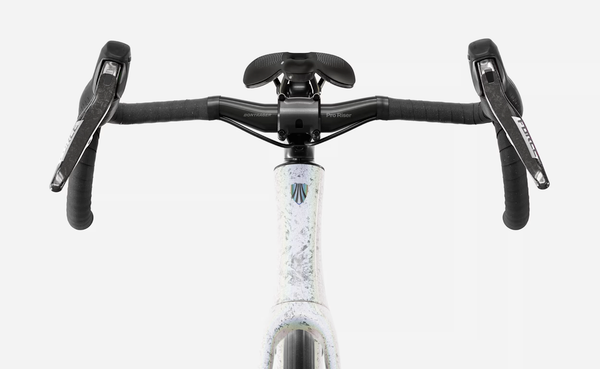
The new Domane comes with a riser bar. It adds 20mm of height, and it's standard equipment across the range — not an upgrade, not an option, and not limited to the cheaper builds. One model is the exception: the SLR 9 AXS 1x, which gets an integrated cockpit instead.
That 20mm sits on top of every stack number in the chart above.
Where the handlebar actually ends up
The right-hand column assumes the stock 20mm riser bar, which is standard across the range apart from the SLR 9 AXS 1x, and a like-for-like spacer stack. Every size ends up with the bar higher than the one it replaces. Swapping to a conventional bar takes 20mm back out.
Every size ends up with the bar higher than the one it replaces. Not one comes out lower. A 54 rider moving to an M gets an identical frame and a bar two centimetres further up. A 52 moving to an M gains nearly three and a half.
The 60 is the interesting one. On paper it loses 14mm of stack moving to an L, which reads like a problem. With the bar accounted for, it gains 6mm. Nothing to solve.
Why build the height into the bar
Because the alternative is a tower of spacers, and Trek says as much — the riser exists to give a more upright position "without complicating the front end."
There's a second thing it buys, and it matters more. Frame stack and riding position are now separate decisions. The frame sets a floor; the bar sets where you actually sit. Want to be lower than stock? Fit a conventional bar and take the 20mm back out. Want upright? It arrives that way.
Which is the same idea as the fixed seat tube angle, applied to the other end of the bike: the frame supplies a coordinate, the components supply the position. It's also a second reason eight sizes could become six. Height adjustment moved off the frame.
There's a detail that confirms how deliberate this is. The one build that skips the riser bar — the SLR 9 AXS 1x — is also the one build Trek's white paper exempts from the 35mm tire spec. The fastest bike in the range opts out of both. Everything else gets the wide tire and the tall bar as the default, which tells you which bike Trek thinks it's actually making.
Why the numbers went away
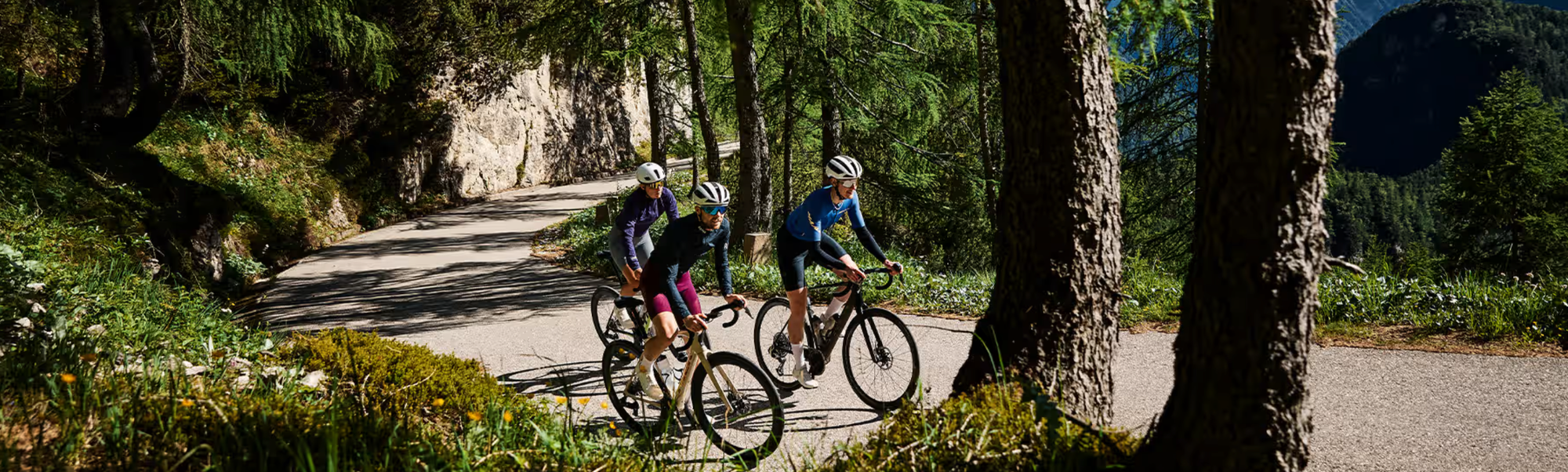
On the old chart, the frame labeled "47cm" had a seat tube measuring 42.0cm. The one labeled "62cm" measured 58.6cm. Every label on that chart was four to five centimetres off the tube it was named after.
That isn't a Trek problem. It's an industry holdover from when road frames had horizontal top tubes and seat tube length told you something real. Sloping top tubes ended that decades ago. The numbers stayed anyway.
The old chart measured a tube. The new chart measures where your body ends up.
Stack is how high the handlebar sits. Reach is how far forward it sits. Those two figures together describe a riding position. Frame size never did.
The change that makes those numbers honest
One other figure had to move first: seat tube angle — how steeply the saddle sits over the pedals.
On the old Domane it ran from 74.6° on the smallest frame to 72.5° on the largest. Over two degrees of spread. Small frames pushed the rider forward, large frames set them back. Not because small riders want to sit forward, but because that's what the frame's proportions demanded.
On the new Domane every size sits between 73.3° and 73.7°. Effectively one angle across the range.
In practical terms, your saddle position is now set by your seatpost and your saddle rails, which is where it was always supposed to be set. The frame stays out of it.
The side effect matters more than it sounds. When seat angle varies by size, a reach figure doesn't tell you the real distance from saddle to bar, because the saddle keeps moving underneath it. Hold the angle constant and reach finally means one thing across every size. The chart becomes a coordinate system instead of a list of tube lengths.
What the range tells you
Across the whole range
Vertical range held; horizontal range cut by 27%. Seat tube angle went from a two-degree spread to effectively one angle across every size.
Stack range across the new lineup runs 52.4cm to 64.8cm. On the old lineup it was 52.7 to 65.6. Almost identical.
Reach range is 36.8 to 38.4, against 36.4 to 38.6 before — 27% narrower.
Trek kept the full vertical spread and cut the horizontal one. The reasoning behind that is straightforward: riders differ far more in height than in torso-plus-arm length, and the dimension that varies less can be handled by a stem.
The wider tire, and three generations of subtraction
Now the part that isn't about sizing.
Trek has been removing things from this bike for three generations.
Gen 3 had IsoSpeed at both ends of the frame, with the rear adjustable.
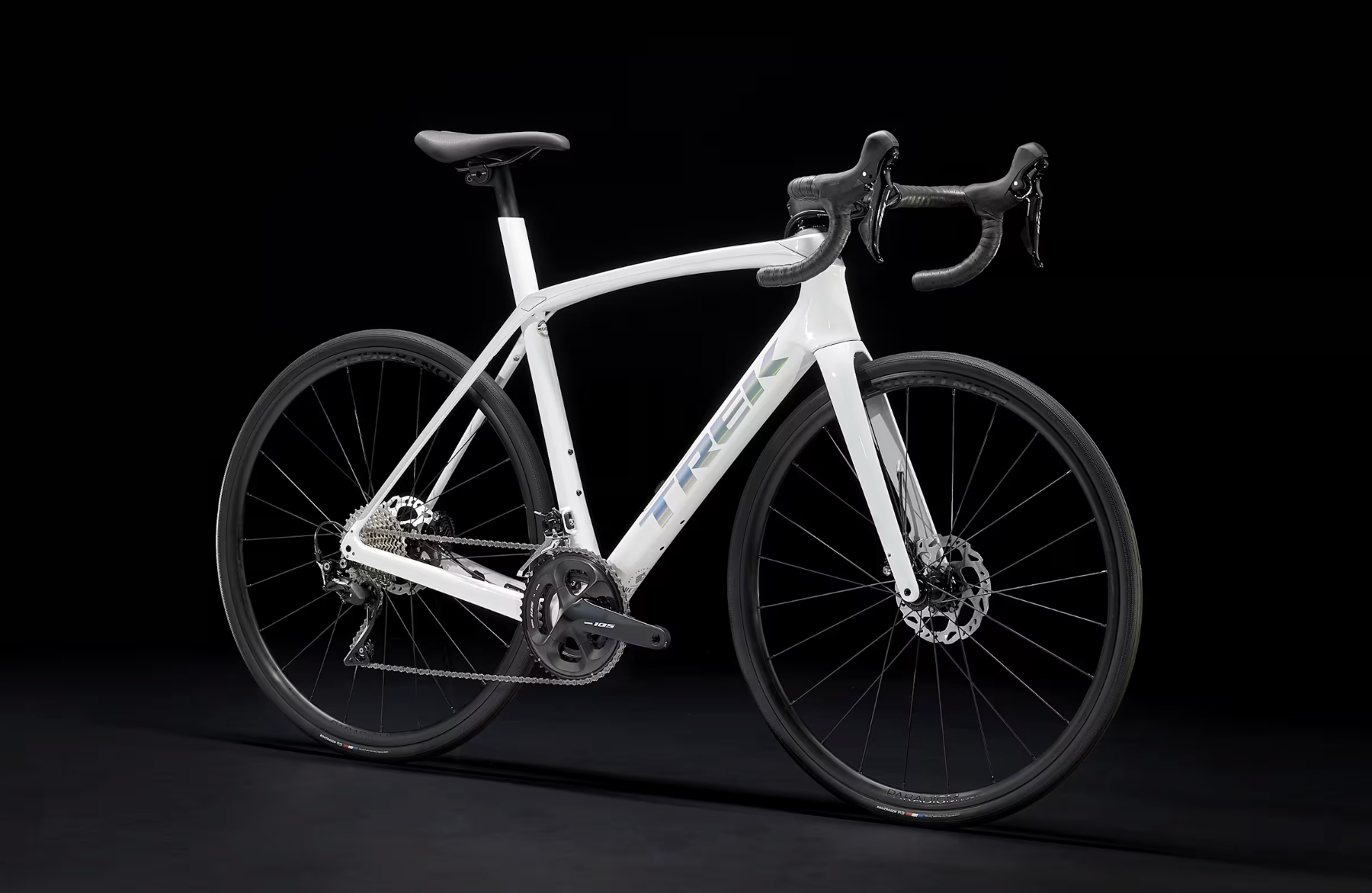
Gen 4, in 2023, deleted the front IsoSpeed and the rear adjustment. Trek's stated reason at the time was that wide tires at low pressure do the same job. Clearance went up to 38mm.
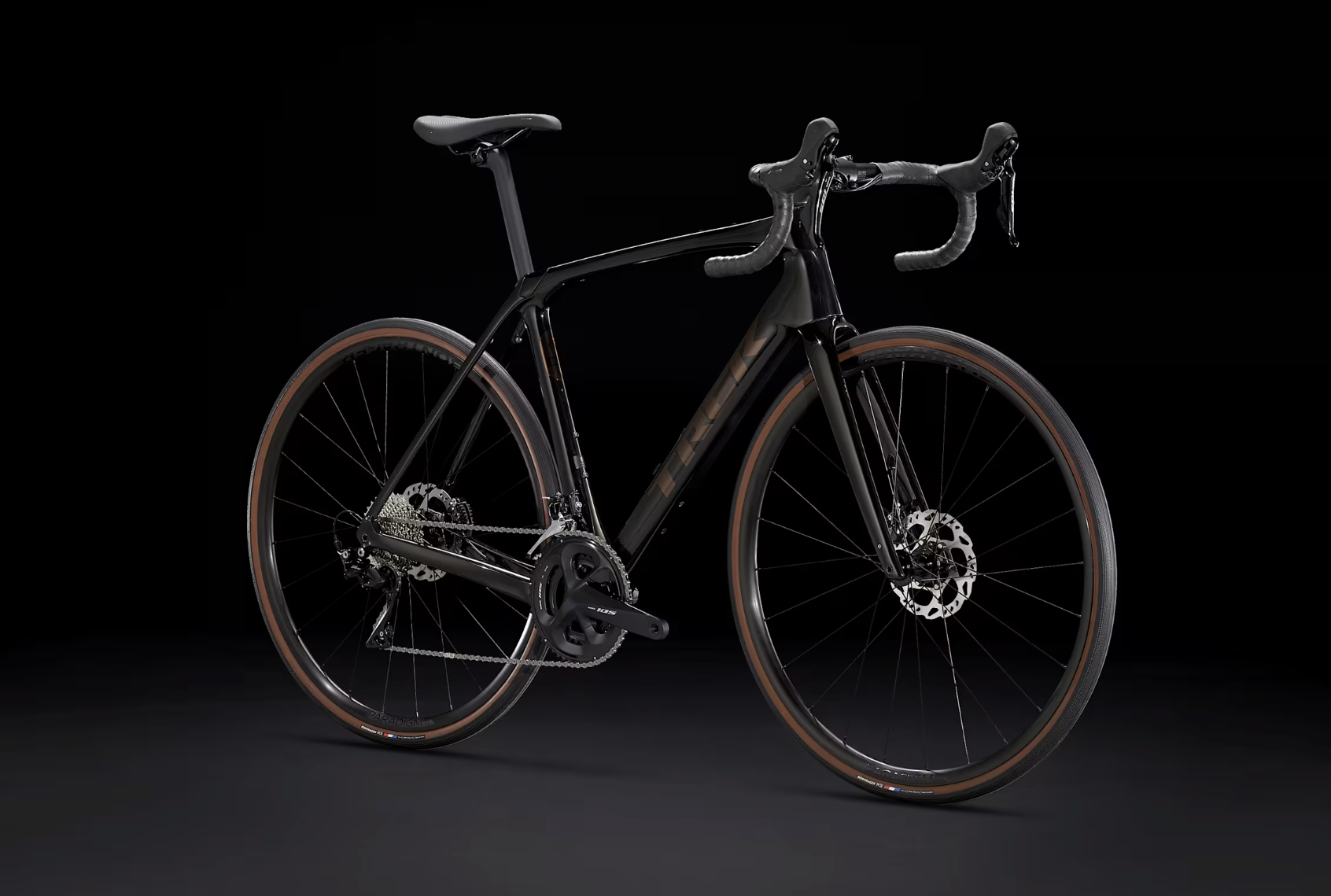
Gen 5 removes the rear IsoSpeed as well. Clearance goes to 40c, and the stock tire moves up with it — 35c, against 32c on the outgoing bike.
Each generation has taken another piece out of the frame and put a little more air in the tire. This one finishes the job.
Trek's own testing puts a number on where that ended up. Measured on their treadmill, a first-generation Domane — IsoSpeed fitted, 25mm tubulars, the pressures those required — transmits 19% more vibration energy to the rider than the new bike, which has no IsoSpeed at all.
The mechanism lost to the tire, and Trek is the one saying so.
The change shows up in the geometry chart without anyone having to announce it. Trail — the figure describing how strongly a bike holds a line — went from 5.9–6.1cm to 6.2–6.3cm. Head angles and fork offsets barely moved between generations, and those are the only other inputs. The one remaining variable is tire radius.
Working backwards from the published trail figures, the new chart is built on a tire roughly 8mm larger in radius than the old one. That's more than the labels suggest, and the reason is worth knowing: a tire's printed size is a starting point, not a measurement. Rims have been getting wider, and a wider rim stretches the same casing further. A 35c on a current endurance wheel measures close to 37mm. The 32c the old chart was drawn around sat nearer 30mm.
Three millimetres on the label. Closer to six or seven on the road.
Where the smoothing happens now
IsoSpeed was one part doing one job. The new bike splits that job three ways.
The seatpost is shaped for it — an oval internal cross-section that gives under a sharp hit but stays stiff sideways when you load the saddle through a corner.
The frame layup was tuned to allow vertical movement while holding pedaling stiffness.
The tire does the rest, and does the most.
Splitting it up works better than one clever part for a reason worth understanding. A frame that flexes to smooth the road also flexes when you push on the pedals — the two aren't fully separable, and riders tend to describe the result as muted, or vague under power.
A tire deflects vertically. Pedaling load runs roughly perpendicular to it. Move most of the smoothing into the tire and the two jobs come apart: the tire handles the road, the frame handles the drive.
Trek measured that side of it too. On the Tour magazine pedaling stiffness test, the new frame comes in 6% stiffer than the outgoing one — landing, by their description, between the old Domane and the current Madone. Not a race frame. But more of what you put in arriving at the chain.
One more point that gets less attention: IsoSpeed only ever helped the saddle. Your hands got nothing from it, and neither did the front wheel. A wider tire works at every contact point, on both wheels.
What's actually lost
Less than you'd expect, provided the pressure is right.
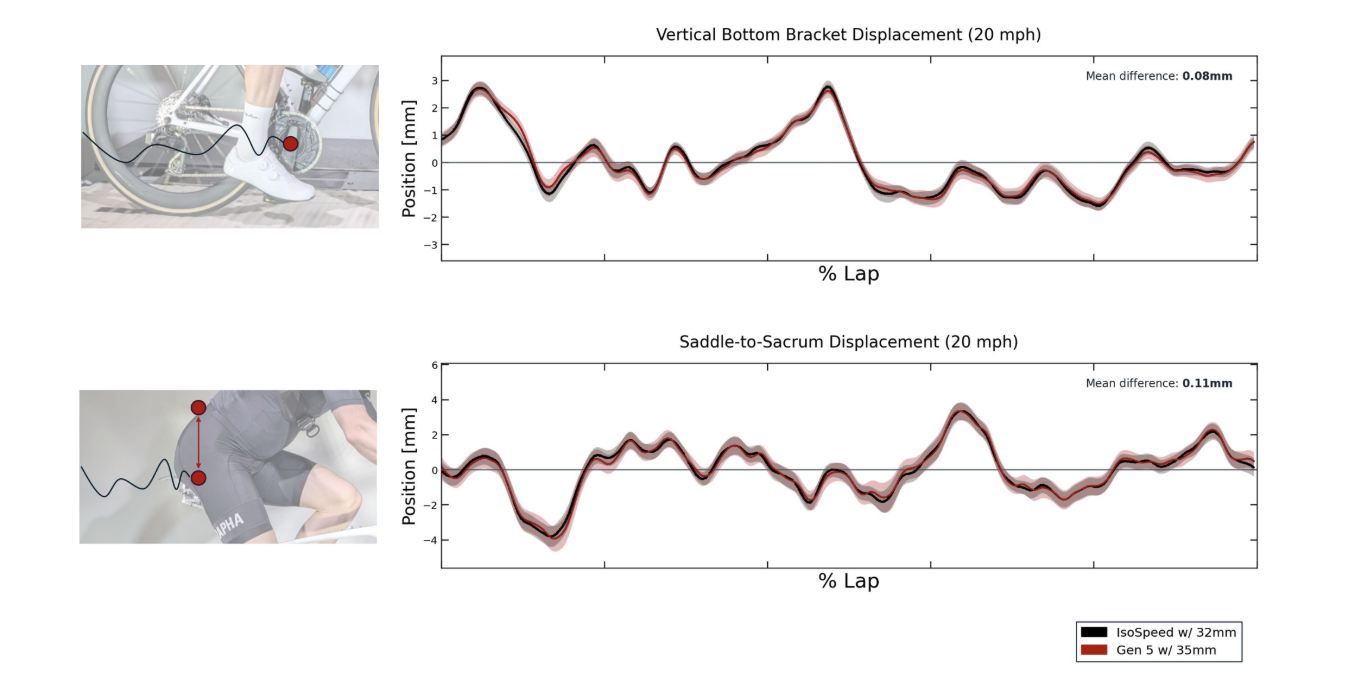
Trek ran both generations on an instrumented treadmill — force-sensing saddle and bars, accelerometers, 3D motion capture — at speeds from 12 to 32km/h. At the top of that range, the difference in vertical bottom bracket movement between the Gen 4 with IsoSpeed and the Gen 5 without it came to 0.08mm. The difference in how well the rider's pelvis stayed planted on the saddle was 0.11mm.
Those aren't numbers anyone feels.
There's still a case that a single sharp edge felt different with IsoSpeed. The saddle moving up and back out of the way is a distinct sensation and it isn't in the new bike. But as a system, over real terrain, Trek's data says the two sit close enough that the difference is hard to locate.
That measurement comes with one condition attached, and it's the next section.
The one number that has to change
Going from a 32mm tire to a 35mm one increases the tire's internal surface area by about 10%. At the same pressure, the outward force on the casing goes up by the same 10%. A bigger tire at your old pressure is a harder tire.
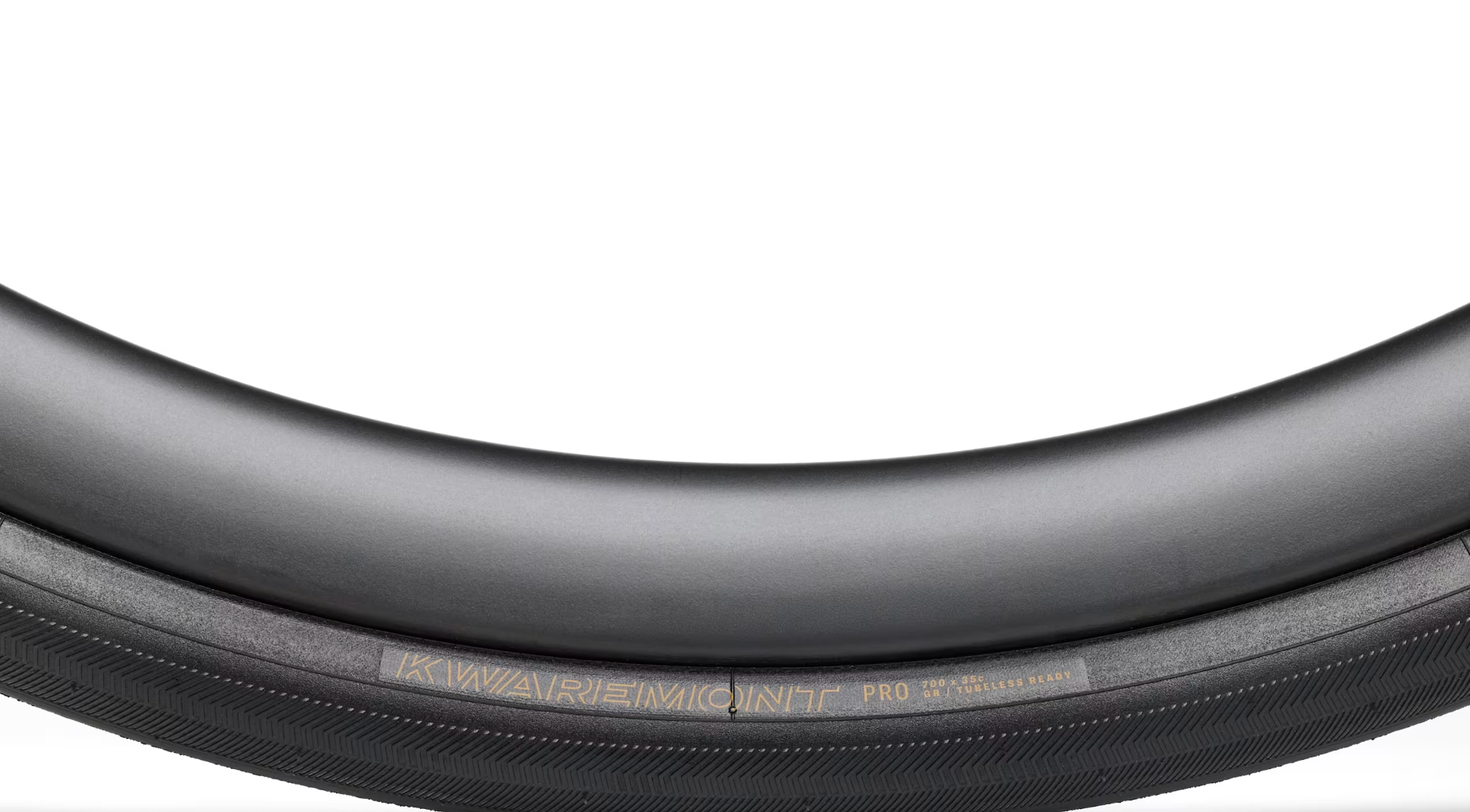
To keep the casing doing the same work, the pressure has to come down about 10%.
That's the setting all of those comfort figures were measured at. Run 35s at your old 32mm pressure and the arithmetic behind them doesn't hold.
This isn't a call for precision. A 35mm tire holds more air than a 32, which makes it less sensitive to being a few psi off, not more — Trek's own testing ran a band of plus or minus 20% around the target. The number doesn't need to be exact.
It does need to move.
And it matters more than it used to, because there's no longer anything sitting behind it. On the old bike, IsoSpeed sat between an over-inflated tire and the rider and quietly absorbed part of the mistake. On this one, the tire is the system. Whatever the tire doesn't take, you get.
Trek set their own test pressures with the Wolf Tooth pressure calculator — free, takes about a minute, and asks for rider weight, bike weight, tire size and surface. Worth running once and writing the number down.
From time to place
Trek still calls this an endurance bike, and the white paper says so plainly. But look at what the engineering actually went after and the emphasis has moved.
The old Domane made its case on duration — something you could stay on for a long time without falling apart. The new one makes it on terrain.
The trail figure is the clearest evidence. It didn't only go up, it went flat: every size in the new lineup lands between 6.2 and 6.3, where the old range wandered between 5.9 and 6.1. Small and large frames now steer the same way, which was not true before. Nobody spends engineering effort on that to make a bike comfortable. You do it for a bike meant to be ridden fast on surfaces that aren't good, for long enough that you get tired.
One thing worth being clear about: a 35c tire is not faster than a 32c on smooth tarmac. It's heavier, it carries more rotating weight, and it costs something in aerodynamics.
What it does is stop you slowing down when the surface goes bad.
On the Korean river paths, that's the figure that matters. The Four Rivers network alternates between fresh asphalt, patched sections, expansion joints, and gravel detours around whatever is under construction that year. Nobody rides those routes at a constant speed. The question was never top speed. It's how much you give up in the parts that aren't smooth, and how much of you is left at hour six.
The bike can still do long days. That's just no longer the pitch — it's the consequence.
Which situations this suits
Both directions, because neither list is much use alone.
It suits you if:
- Most of your riding ends up on the river paths, where good asphalt and patched asphalt alternate every few kilometres
- You've been running 28s or 32s at high pressure and your hands and lower back give out before your legs do
- You want one bike that handles paved routes and the occasional gravel detour without a second thought
- You currently ride a 54, 56 or 58 Domane — those three convert with almost nothing changing
- You've always ended up on the smallest frame a brand makes and never quite got low enough on it — the XS frame will finally do it, though not with the bar it ships with
It suits you less well if:
- Acceleration and climbing weight are what you notice most. Wider tires cost both, and the cost is real
- You like a bike that changes direction quickly. The trail increase is a deliberate move toward stability, and stability is the far end of that trade
- You ride with the bar low. Stock, this bike puts your hands 1.2 to 3.4cm higher than the size it replaces, and getting back down takes work
That last one needs detail.
If you were on a 52
Trek puts you on an M, which is where a 54 also lands. Reach goes up 3mm, which a stem covers. Frame stack goes up 14mm, and the riser bar adds 20 more.
That's 3.4cm of bar height — the largest jump anywhere in the conversion.
If you ran your 52 with a tall spacer stack, some of that comes straight back out. If you were already slammed, the honest answer is that the stock build is a long way above where you've been, and closing it means a conventional bar as well as no spacers. Worth sorting before delivery rather than after.
If you were on a 60
The chart makes this one look worse than it is. Frame stack drops 14mm moving to an L, but the riser bar puts 20mm back, so your hands end up 6mm higher than on the 60. Reach comes down 3mm and the seat angle is half a degree steeper, which nudges the saddle forward slightly.
In practice this is close to a straight swap.
The XL is the other option, and it's 3cm of frame stack above the L — a long way to go for a rider who only needed a little more.
And one note on the smallest size
A 47 converts to XS with 4mm more reach and 3mm less stack. On paper, nothing. But the seat angle is 1.1° slacker, and that moves your saddle roughly a centimetre further back on its own.
Added up, that's about 1.5cm more distance from saddle to bar — a stem length, plus some. It's the one conversion where the number that matters isn't in the stack column.
The other thing worth knowing about the XS is a distinction between the frame and the bike.
As a frame, it's the best-proportioned small Domane there has been. Stack-to-reach comes out at 1.42, which is race-bike territory — the old 47 sat at 1.45 and got there by being short rather than by being low, which is a different thing and not as useful. Small frames on 700c wheels can only go so low; the head tube is already down to 10.6cm and there isn't much floor left. Trek couldn't drop the bar much further, so they lengthened the bike instead.
As a bike, though, the XS arrives 17mm taller at the hands than the 47 did, because the riser bar is on it. The low proportion is available. It isn't what turns up.
For a small rider who has spent years unable to get low enough, that's good news with one step attached: the frame will finally do it, once the bar comes off.
Whether that reads as a fix or a loss depends on what you wanted from the bike. It's a fix if you were fighting to get low on it. It's a loss if you were on the 47 because it was the shortest thing available.
Domane Gen 5 — Geometry
All measurements in cm unless otherwise noted. Letters match the labels on Trek's geometry diagram.
Swipe the table sideways to see every size →
Reach and stack are highlighted because they're the two rows that decide your size. Both describe the frame only — stack is measured to the top of the head tube, so the 20mm riser bar sits on top of every figure in that row.
Choosing a size
One figure changed the arithmetic here.
Steps between sizes on the old chart were about 18mm of stack and about 3mm of reach. On the new chart it's about 25mm of stack and still about 3mm of reach.
Reach barely moves between sizes. Stack moves a lot. Which means picking a size is now almost entirely a decision about handlebar height — reach is the stem's job.
The practical consequence is about which mistake you can undo, and the riser bar changes the answer from what it used to be.
Too high is now the easy mistake to fix. You have 20mm in the bar and whatever your spacer stack holds — call it three to four centimetres of downward range before you run out. That's more room than any previous Domane gave you.
Too low is the hard one. Below zero spacers and a flat bar, the frame's own stack is a floor with nothing underneath it. And going up beyond stock means steerer length, which arrives cut and can't be added back.
So if you're genuinely between two sizes, the smaller one still leaves you more room to work with — but the reason has changed. It isn't that you can stack spacers forever. It's that the bike now ships high, so almost all of the adjustment you're likely to want runs downward, and downward is the direction that's covered.
If you're converting from a bike you already own, use Trek's table. It's built to protect the number that's hardest to get back.
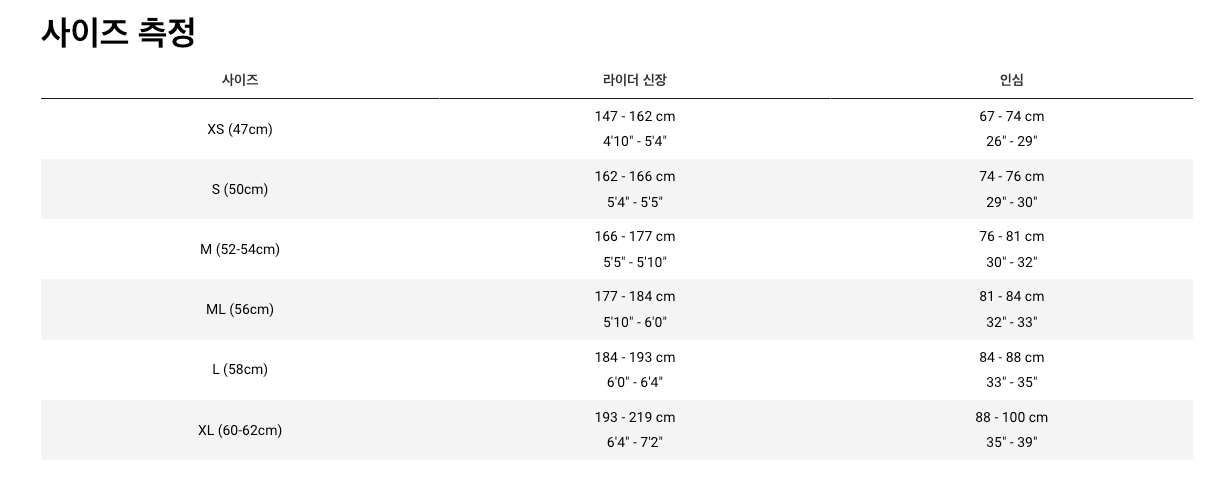
Initial stock here is M, ML and L, which between them cover the old 52, 54, 56, 58 and 60.
Weight
Trek quotes a 292g saving against the outgoing bike — with the IsoSpeed assembly gone, and its service interval gone with it.
Two things are worth knowing about that figure. Trek doesn't specify whether it's measured at the frame or at the complete bike. And the wider tires add weight at the wheels, which is usually where a frame saving gets spent. Read 292g as the direction rather than the number you'll feel lifting it off the rack.
One more, since it's easy to run into: the "300g" and "700g" savings quoted around the internet belong to Gen 4's launch in 2023, not to this bike. The numbers are close enough to be mistaken for each other.
The short version
Trek didn't simplify the Domane. They finished something they started three generations ago — taking the job of smoothing the road away from a single mechanism and handing it to the tire, the seatpost and the layup between them — and then rebuilt the size chart around where the rider actually sits instead of how long a tube is.
Your frame fit mostly comes along unchanged. Your handlebar doesn't — stock, it sits 1.2 to 3.4cm higher than the size it replaces, and whether that's a welcome change or a thing to undo is worth deciding before the bike is built rather than after. Either way, set the pressure for the tire that's actually on it, because nothing else is going to cover for it now.
The chart gets you to a short list. The rest of it is sitting on one.