Before You Pump: The Two Tire Pressure Mistakes I See Most
Tire pressure is not complicated. But before talking about how to get it right, it is worth talking about what not to do — because not doing the wrong things comes before doing the right ones.
After years of checking bikes in the shop, the pressure problems I see come in exactly two forms.
Mistake one: never checking at all. Tires lose air on their own, a few psi every week, even with no puncture. A bike that sat in the hallway for two weeks is a bike with soft tires. If you cannot remember the last time you checked, that is the answer.
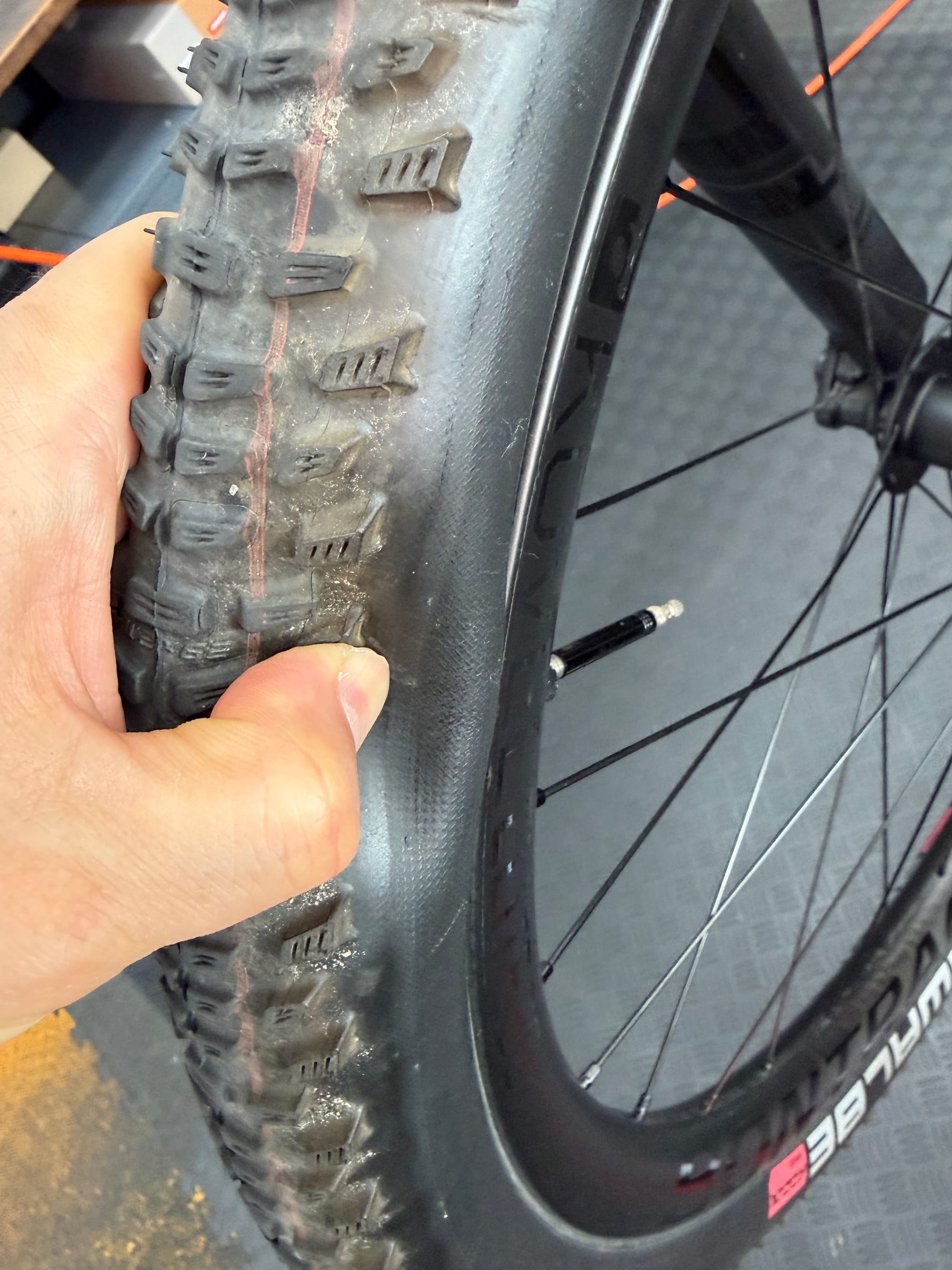
Mistake two: pumping to the maximum. Many riders find the biggest number printed on the tire and pump until they reach it — or simply pump until the tire feels rock hard. This one deserves a closer look, because it comes from a misunderstanding of what that number means.
What the number on your tire actually means
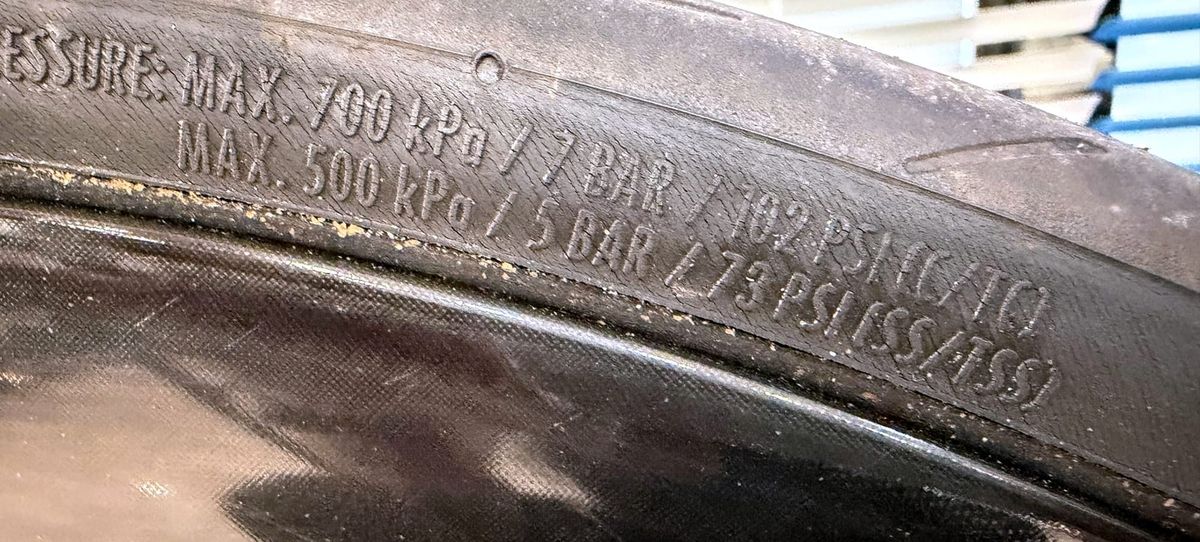
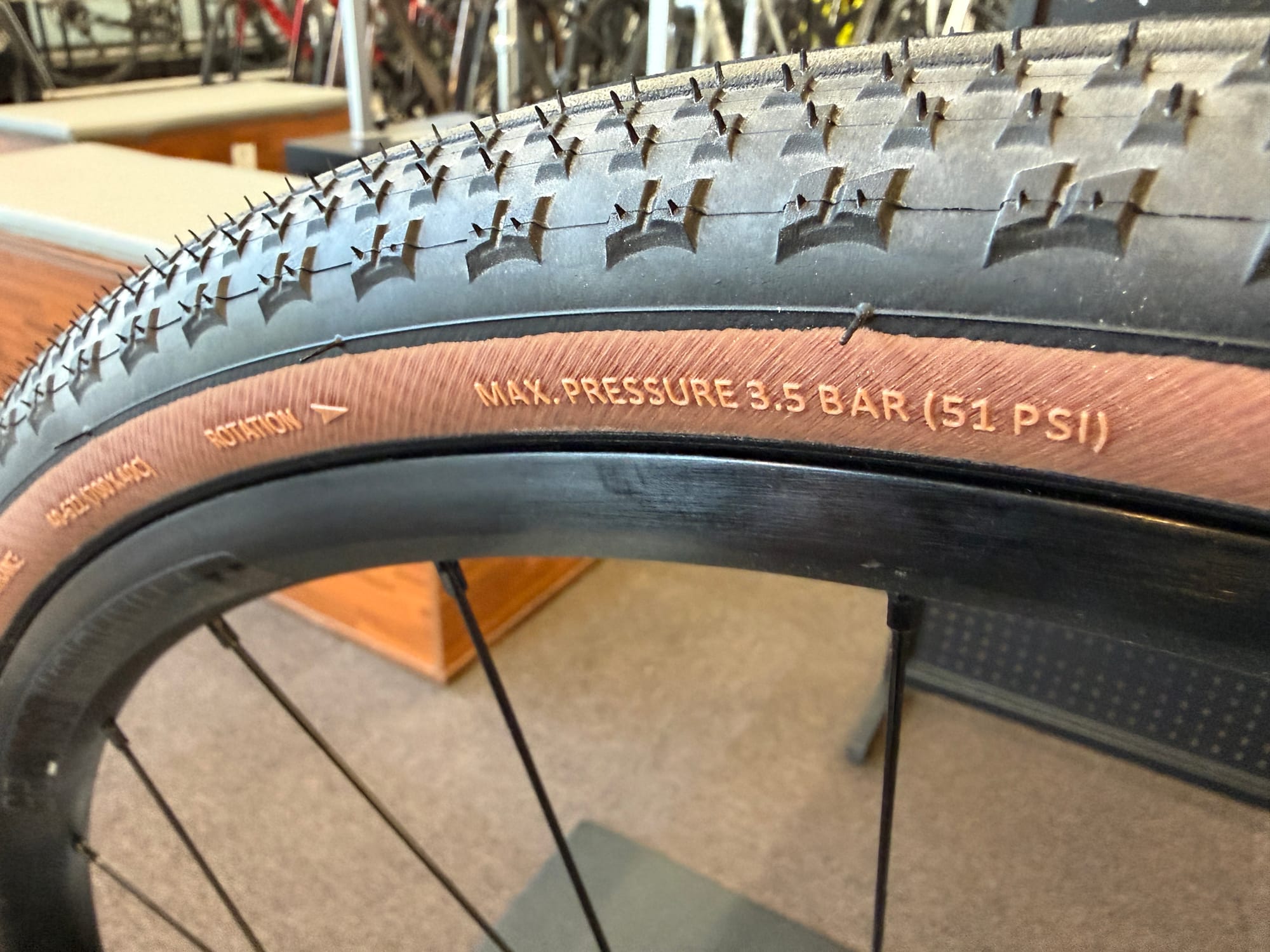
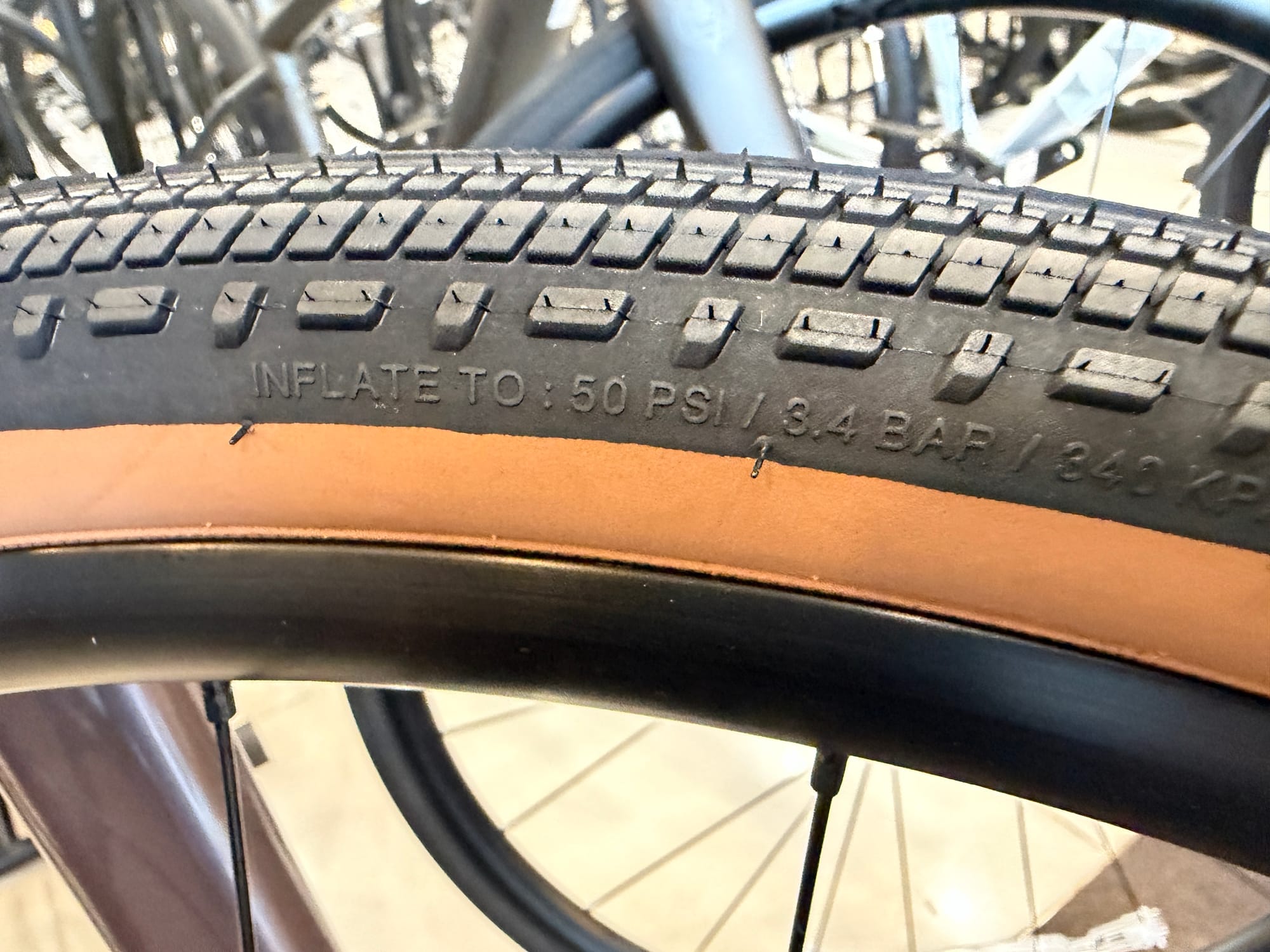
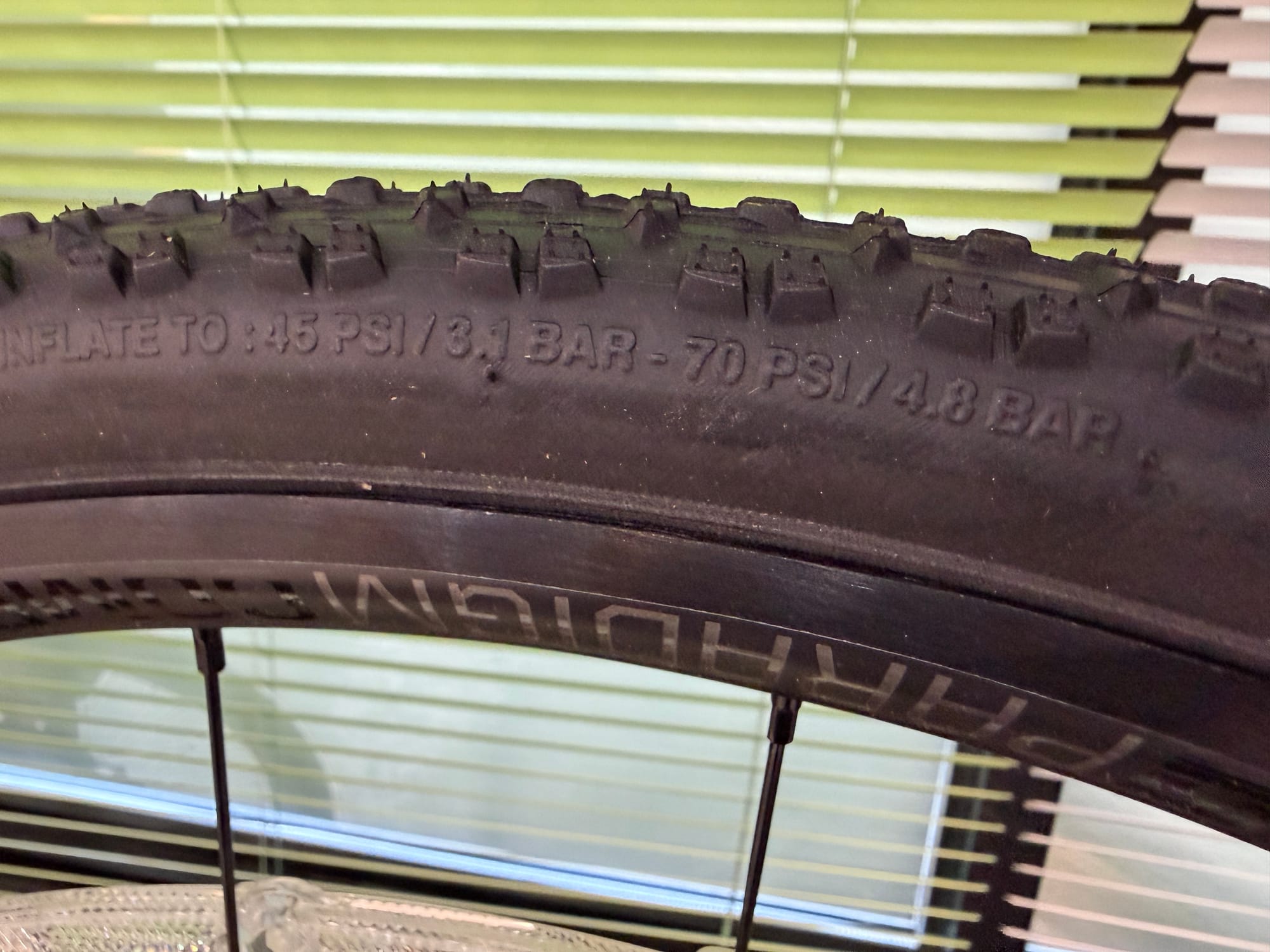
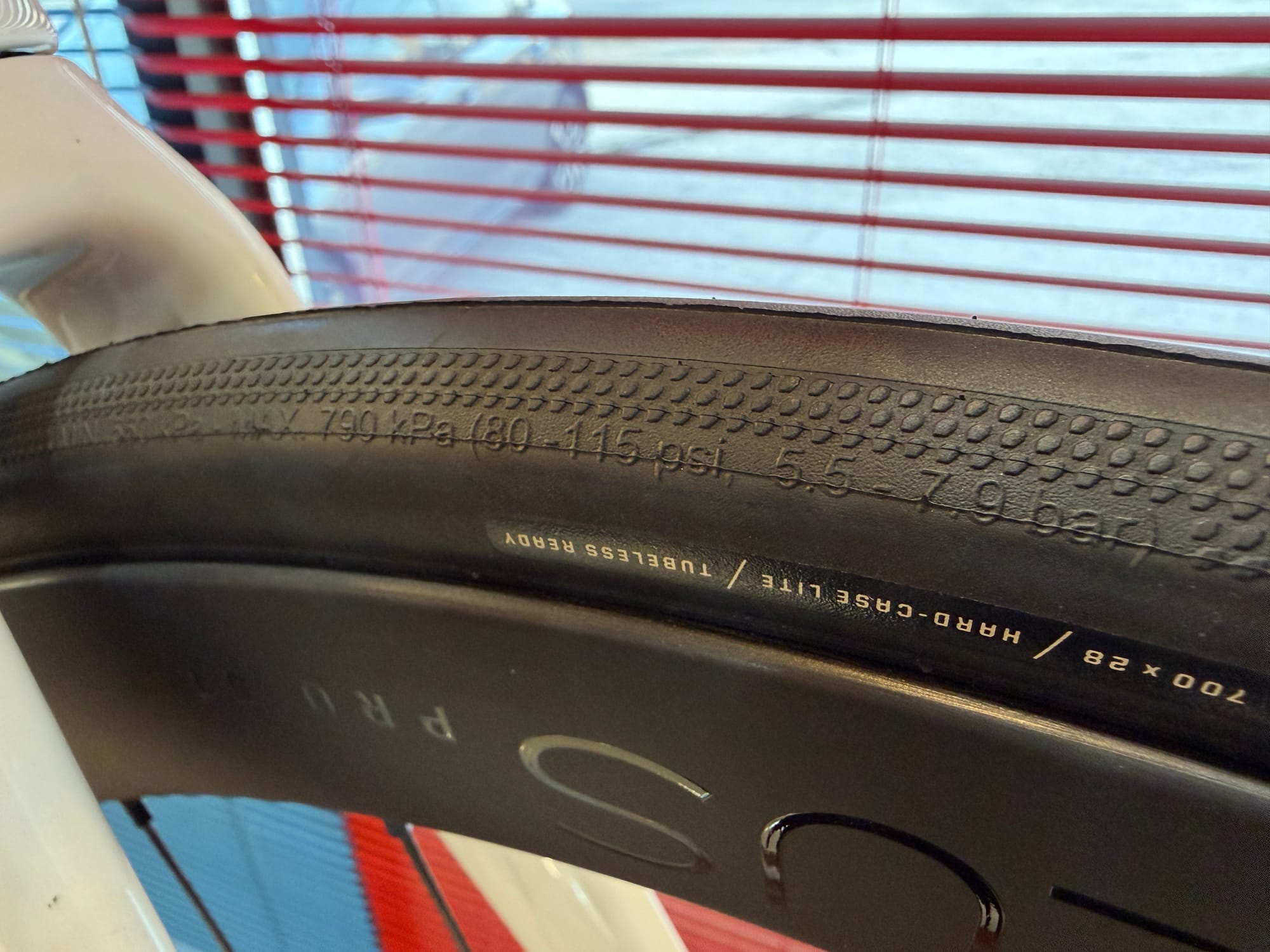
Look at the sidewall of your tire and you will find a maximum pressure, usually in psi. This is not a recommendation. It is the most pressure the tire can safely hold — a ceiling, not a target.
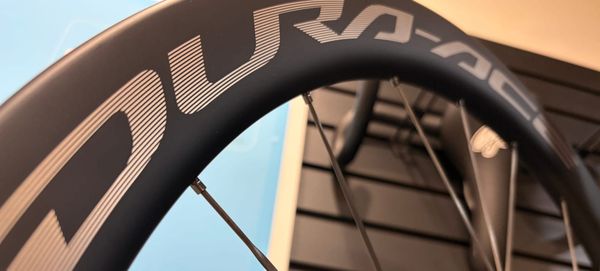
(On some recent high-end wheels, the rim sets its own, lower limit — if you ride a modern carbon wheelset, especially tubeless, check what the rim maker says too. For most bikes, the tire's number is the one that matters.)
One pattern worth knowing: the wider the tire, the lower its maximum. A narrow road tire might say 100 psi or more, a wide mountain bike tire closer to 50. Roughly speaking, maximum pressure runs inverse to tire width.
A simple starting point
So if the maximum is not your number, what is? Here is the simplest way I know to think about it:
Treat the maximum as the pressure for a 100 kg rider, and scale it to your weight.
- Maximum 100 psi, you weigh 100 kg → 100 psi
- Maximum 100 psi, you weigh 80 kg → 80 psi
- Maximum 50 psi, you weigh 80 kg → 40 psi
That is it. Your weight in kilograms, as a percentage of 100, applied to the tire's maximum. It is not a laboratory-grade formula, but as a starting point it will put you far closer to right than either of the two mistakes above.
The myth that refuses to die
Here is the most important thing not to believe: that higher pressure always rolls faster.
It feels true — a hard tire feels fast. But on real roads, rolling resistance increases when pressure is too high and when it is too low. An overinflated tire stops absorbing the road surface and starts bouncing off it, and that vibration costs you energy. Somewhere between too hard and too soft is a sweet spot — and because it depends on your weight, your tire, and your road, that sweet spot is different for every rider.
That is the real reason "correct tire pressure" exists as a question at all. If harder were simply faster, the answer would be the same for everyone: maximum.
Adjusting from the starting point
Once you have your weight-based number, two small adjustments are worth making:
- Road surface. On smooth pavement — like most of Korea's riverside bike paths — go about 5 psi higher. On rough or broken roads, about 5 psi lower.
- Comfort. If a smooth ride matters more to you than outright speed, take another 5 psi off. That is a perfectly good trade.

You probably DO NOT need a pressure gauge
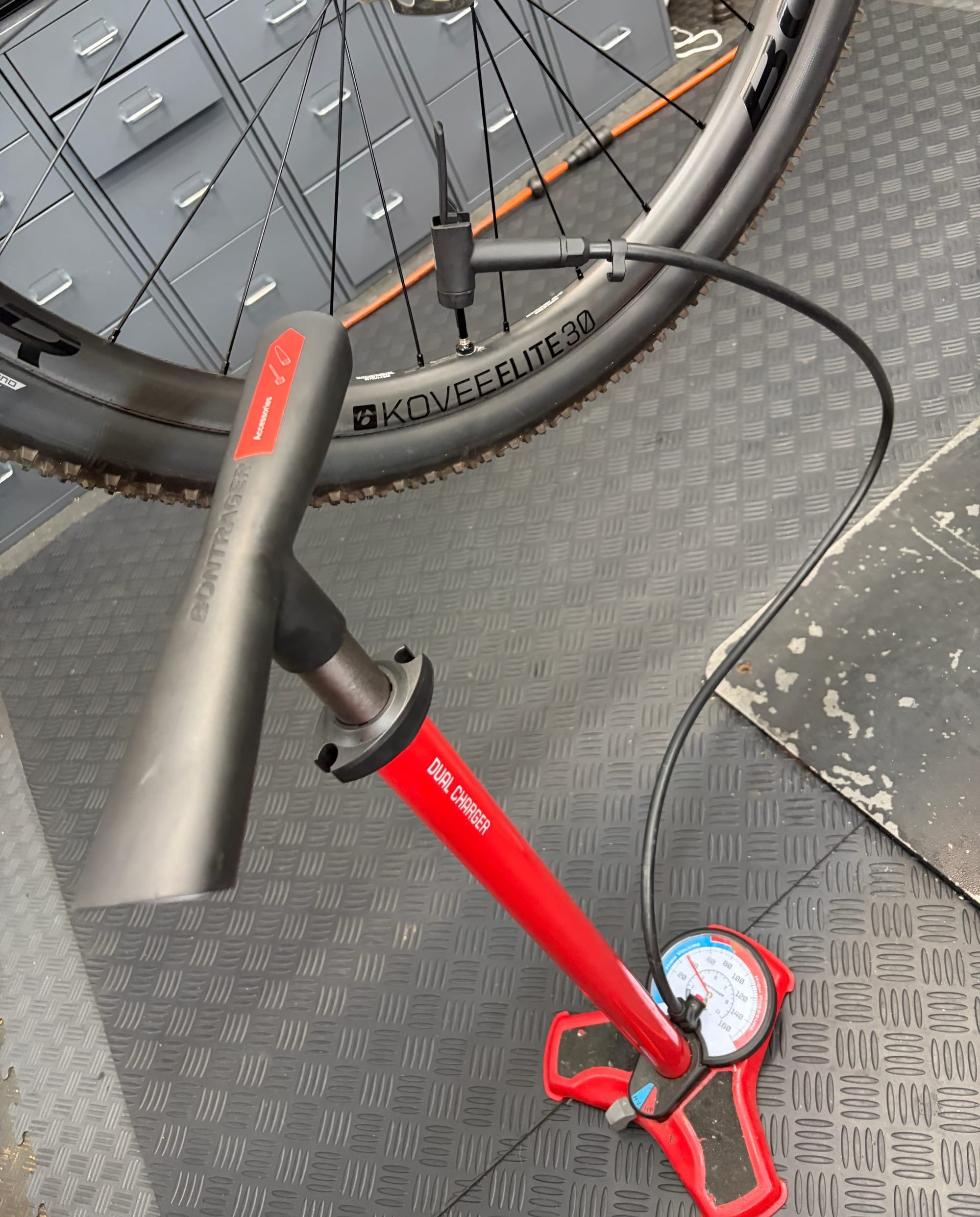
Some riders, once they start caring about pressure, buy a standalone tire pressure gauge. For most people this is money better spent elsewhere. A standalone gauge earns its place when you ride off-road and need to raise and lower pressure depending on terrain, out on the trail. For everyday riding, the gauge on a floor pump is all you need: check before you ride, top up, done.
If you want a more precise number
The weight rule above is a starting point, and for most riding it is close enough. But if you want a number tuned to your exact setup, there are free online calculators that factor in tire width, rim type, and road surface. SRAM's tire pressure guide is a good one — answer a few questions and it gives you a pressure for each wheel. Using one of these is a perfectly good way to find your sweet spot, too.

Tire Pressure Calculator by SRAM
Check yours today
Before your next ride, look at your tire's sidewall, find the maximum, and do the math against your own weight. It takes one minute.
Correct tire pressure will not make cycling wonderful by itself — it is a necessary condition, not a sufficient one. But wrong pressure quietly takes something away from every single ride, and it is the easiest fix there is.
And if everything here was already familiar — there are more dials to turn: temperature, season, riding style. But if you are at that level, you will find those answers on your own.