When Shifting Goes Wrong: A Snapped Derailleur Hanger on a Cannondale Synapse

The Job
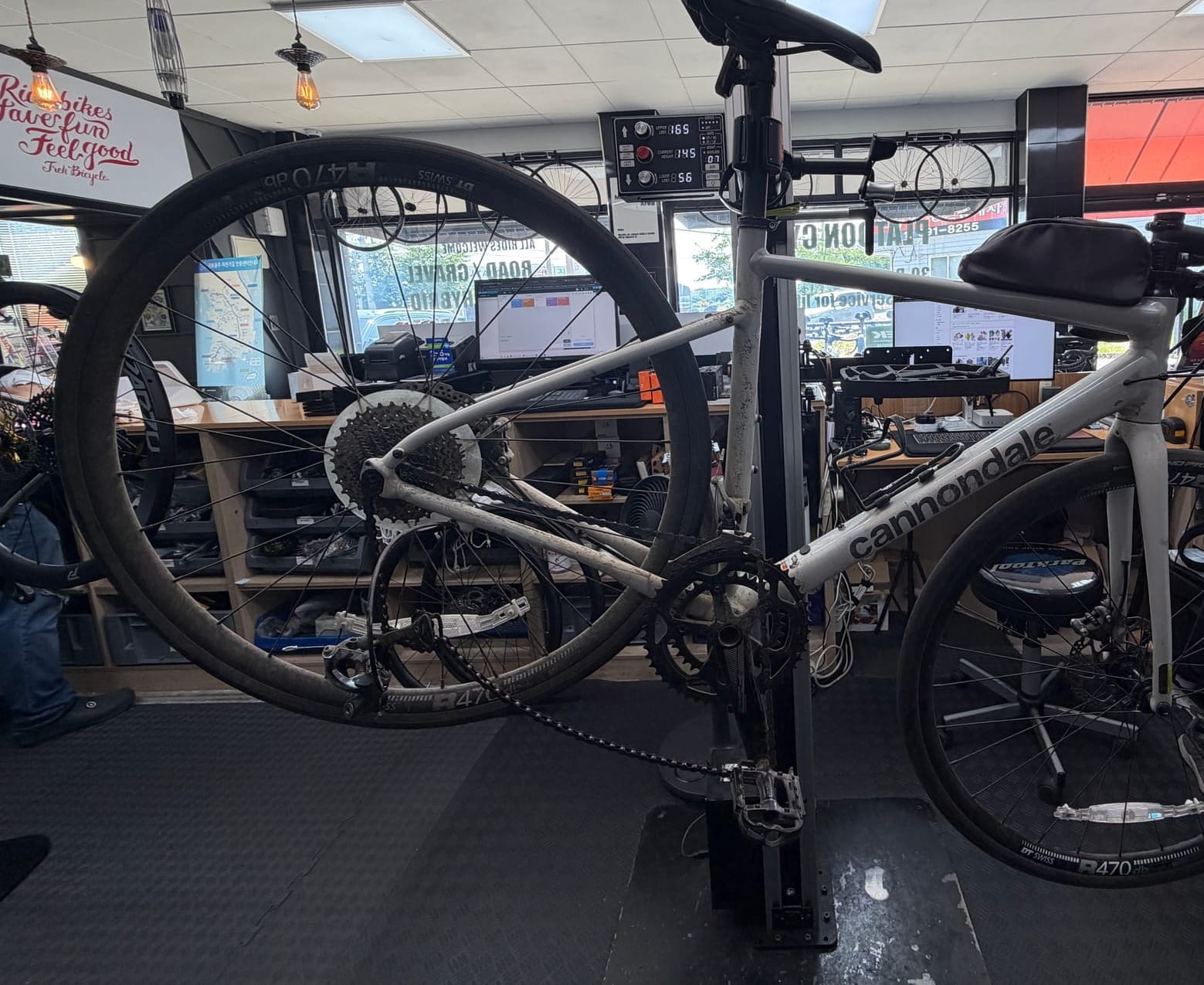
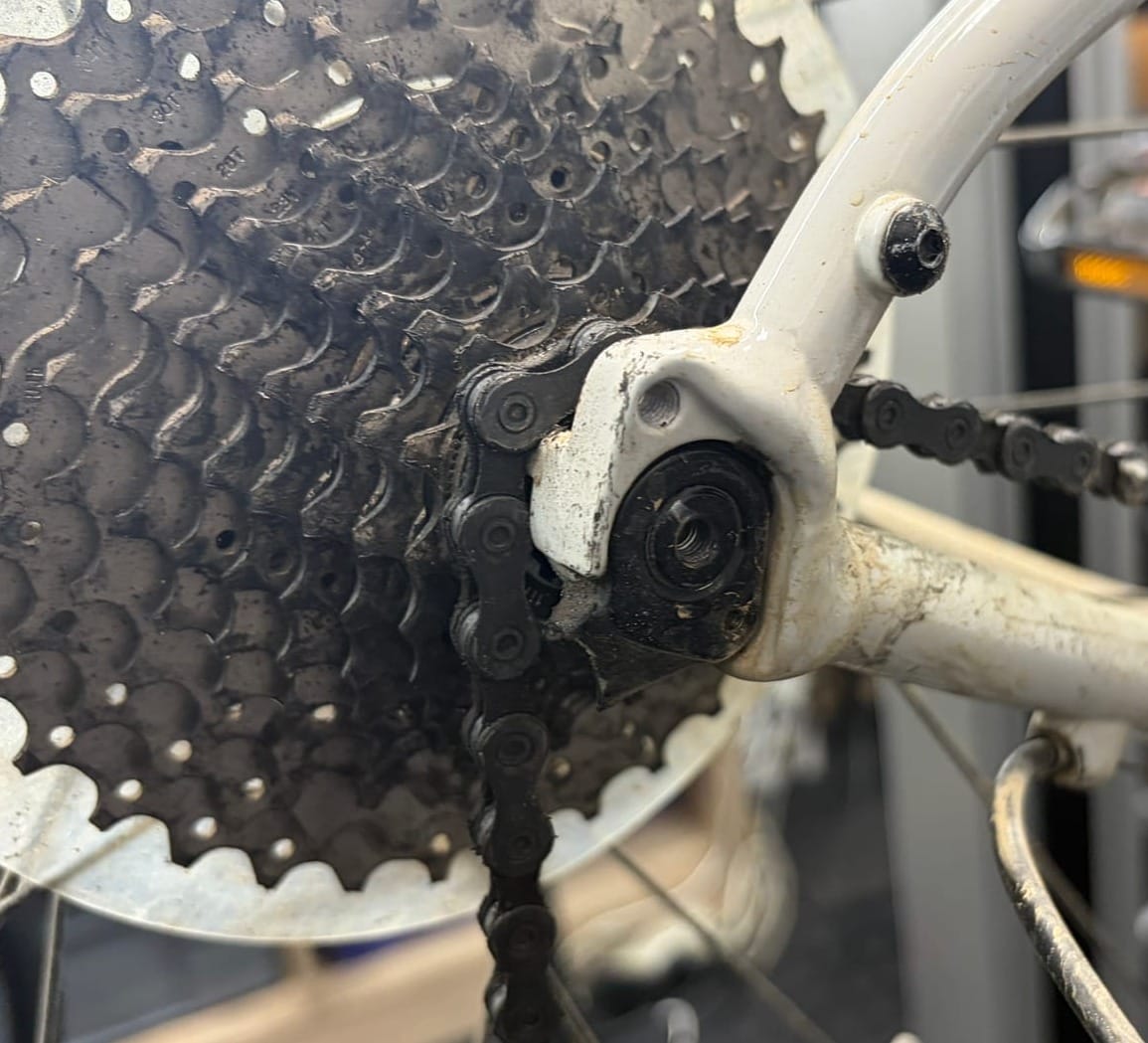
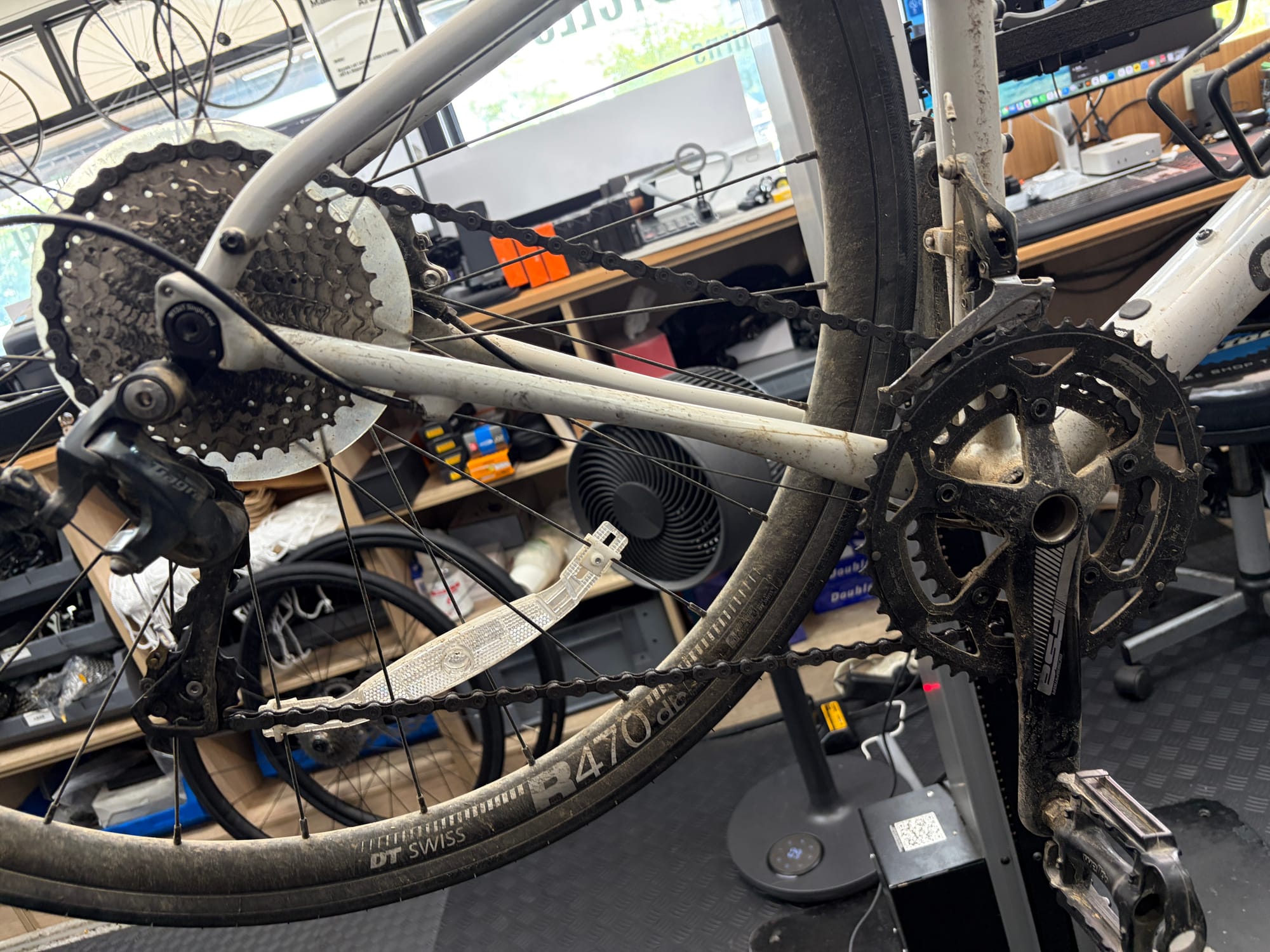
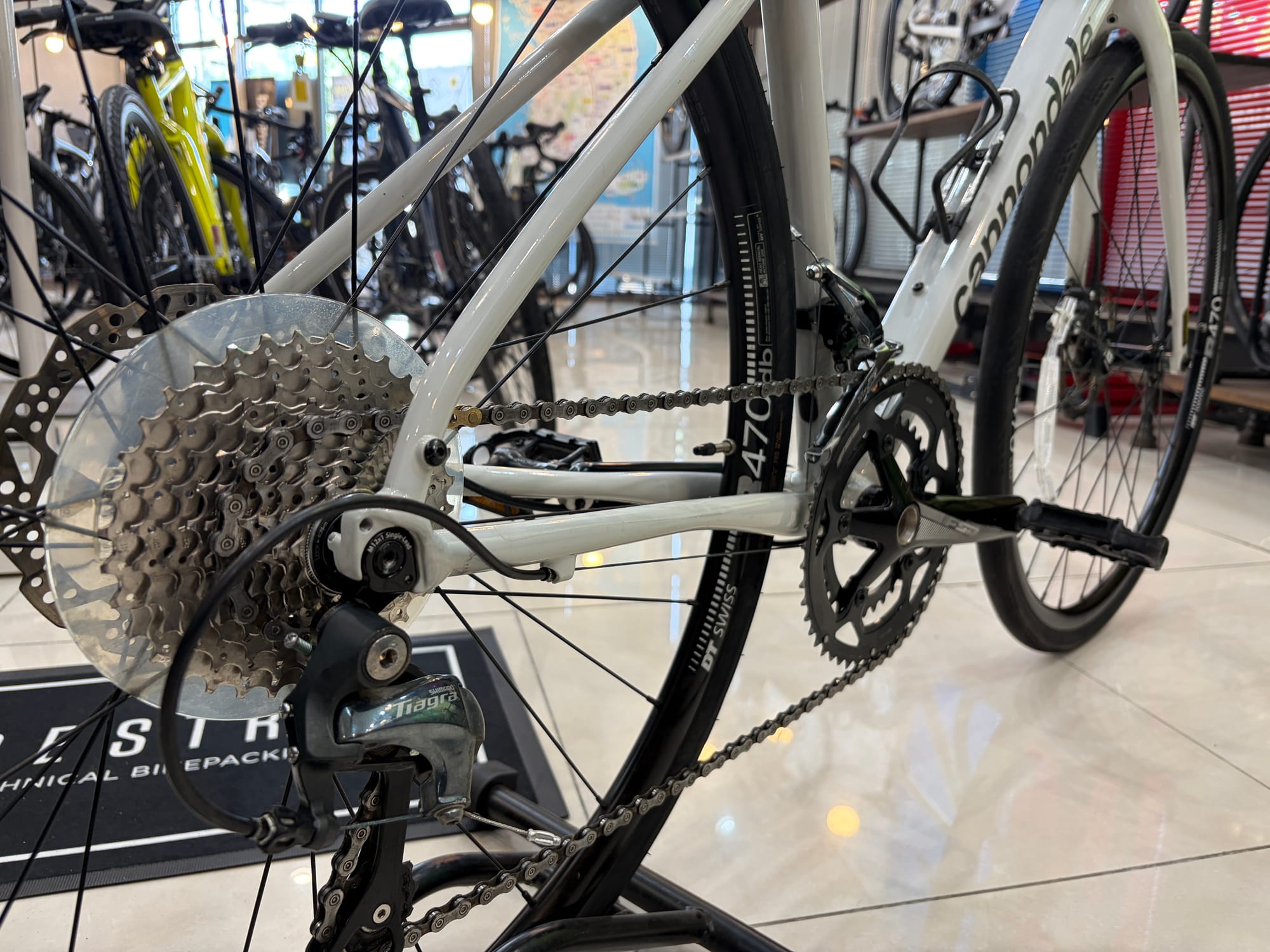
A Cannondale Synapse 1 (aluminum frame, Shimano Tiagra 2×10) came into the workshop with a clear problem: the rear derailleur hanger had snapped clean through. The derailleur was hanging loose, and the bike wasn't going anywhere until it was replaced.
If you've never heard of a derailleur hanger, it's worth knowing about. It's one of the smallest parts on the bike, and one of the most important.
What a Derailleur Hanger Actually Does
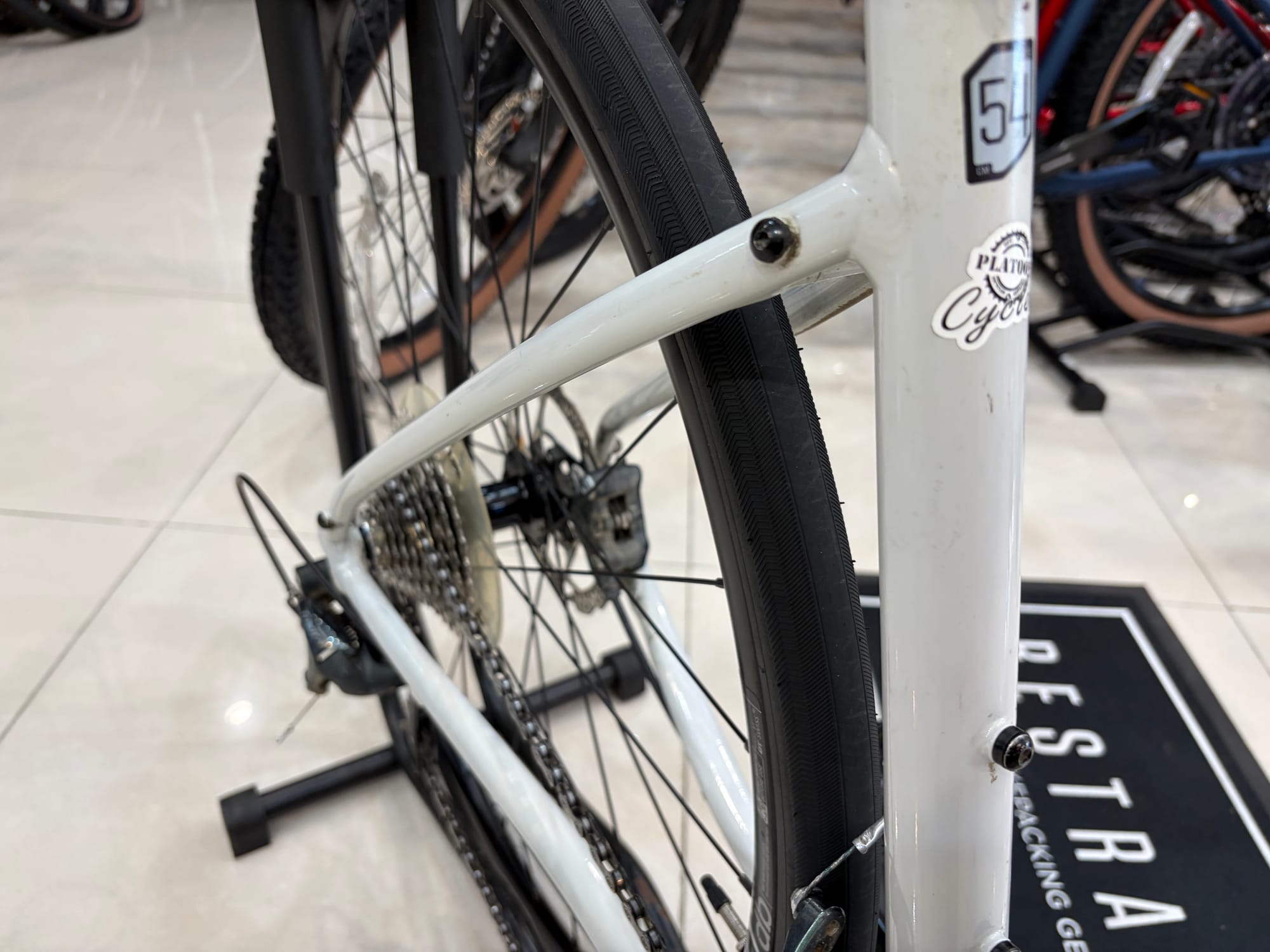
The hanger is the small metal bracket that connects your rear derailleur to the frame. On most aluminum and carbon bikes, it's a separate, replaceable piece bolted onto the frame — not part of the frame itself.
That design is on purpose. The hanger is meant to be the sacrificial part. If the drivetrain takes a hard hit, the hanger is supposed to bend or break first, so the force doesn't travel into the frame or destroy the derailleur. A bent hanger is a cheap, quick fix. A bent frame is not.
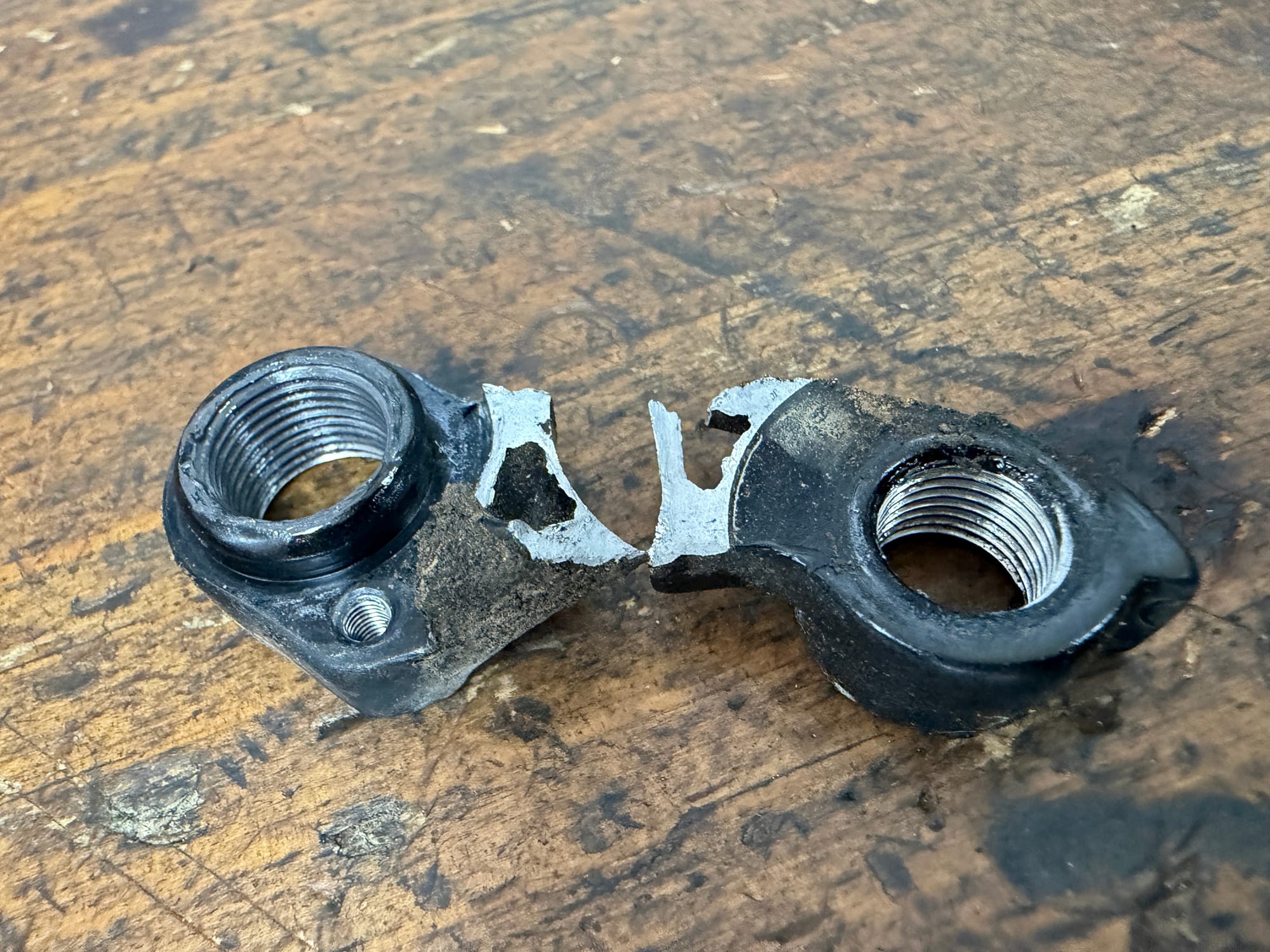
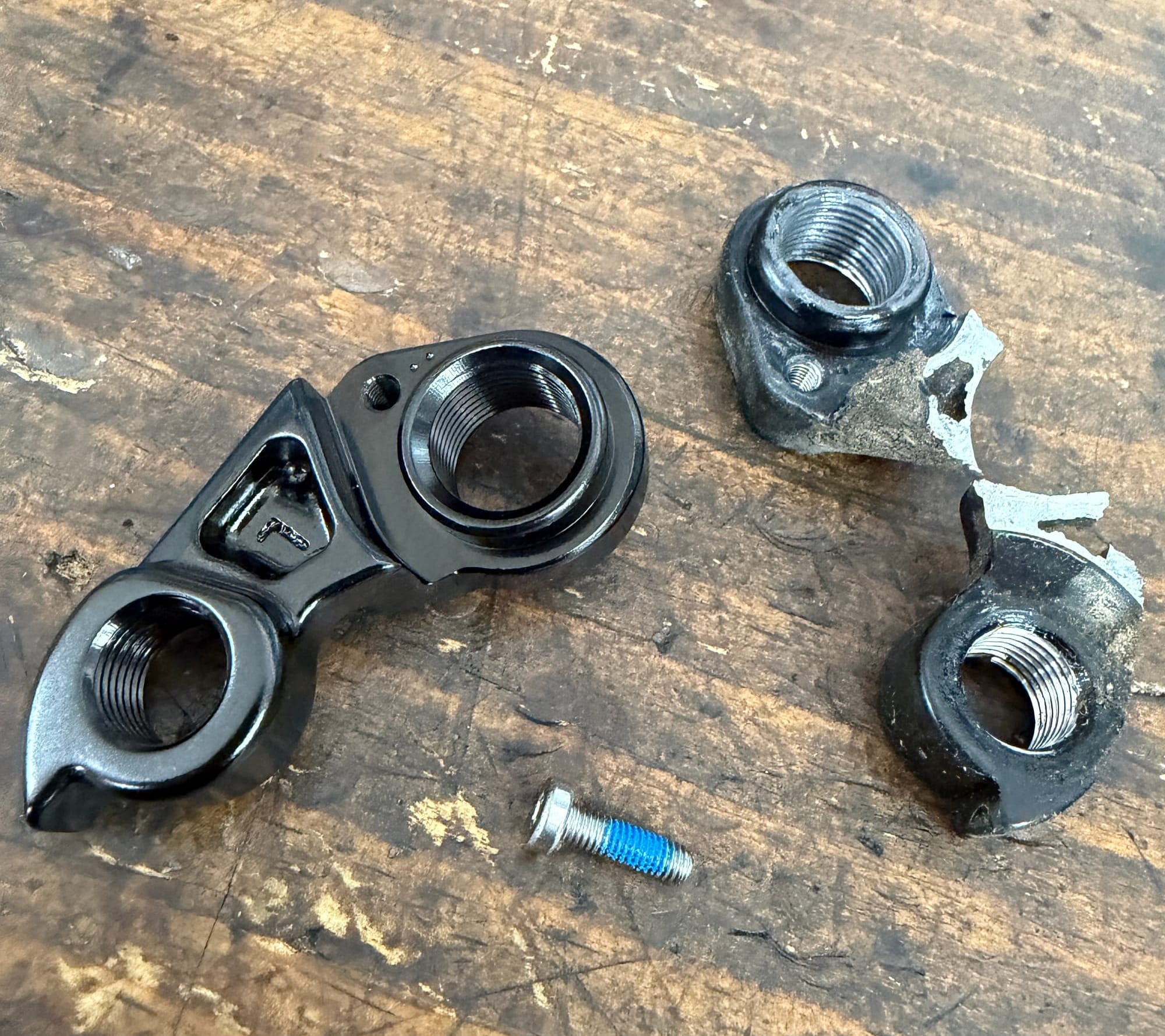
On this Cannondale, the hanger had failed exactly the way it was designed to — it gave way and took the damage so the frame didn't.
Why This Happens So Often
This is one of the most common drivetrain failures we see, and the cause is almost always the same.
When a bike falls over to the right side, or takes an impact on that side, the hanger bends slightly inward — toward the wheel. You often can't see it. The bike looks fine, and it mostly shifts fine.
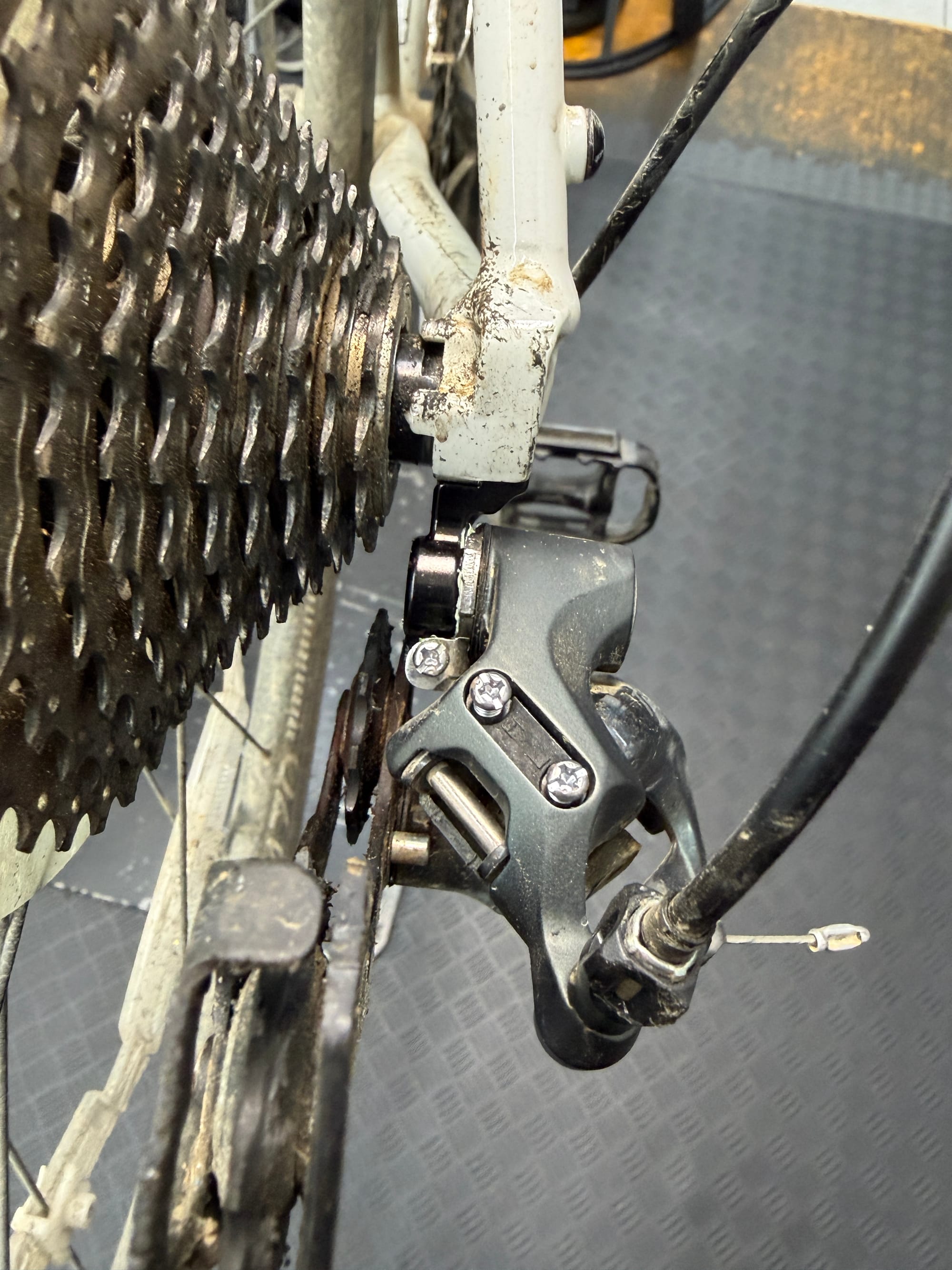
The problem shows up at the extreme. When you shift into the lowest gear — the largest cog, the one closest to the spokes — the derailleur now sits a little too far inboard. Push it far enough and the derailleur cage makes contact with the spokes. The spinning wheel grabs it, and the hanger snaps.
In a worse case, the derailleur itself gets pulled into the wheel and destroyed, and the frame can be damaged too. The hanger breaking is the good outcome.
The Repair
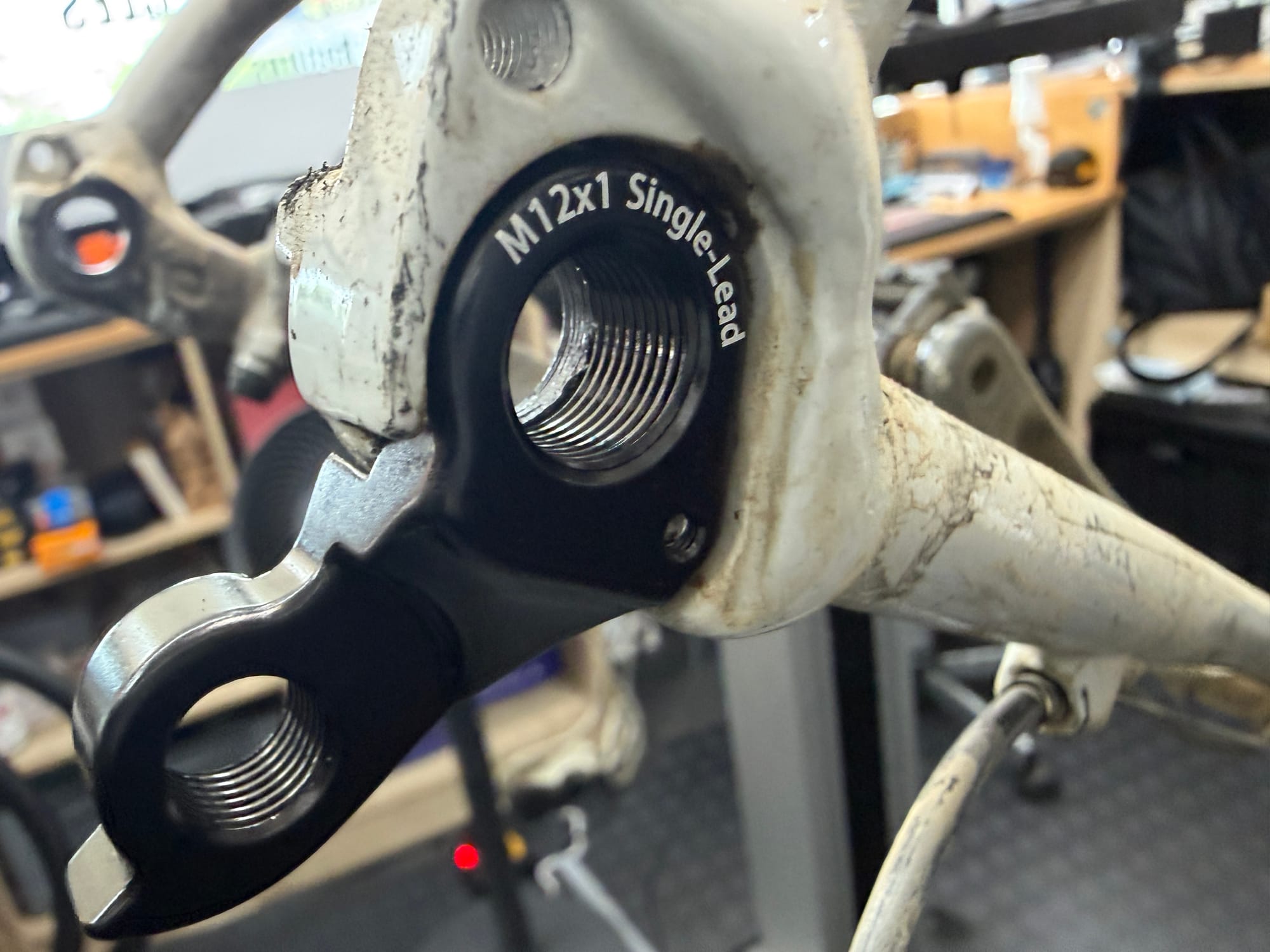
Replacing a hanger is straightforward when the right part is on hand. The Cannondale uses a specific hanger — marked M12×1 Single-Lead — so matching the exact model matters. The wrong hanger won't thread correctly or align properly.
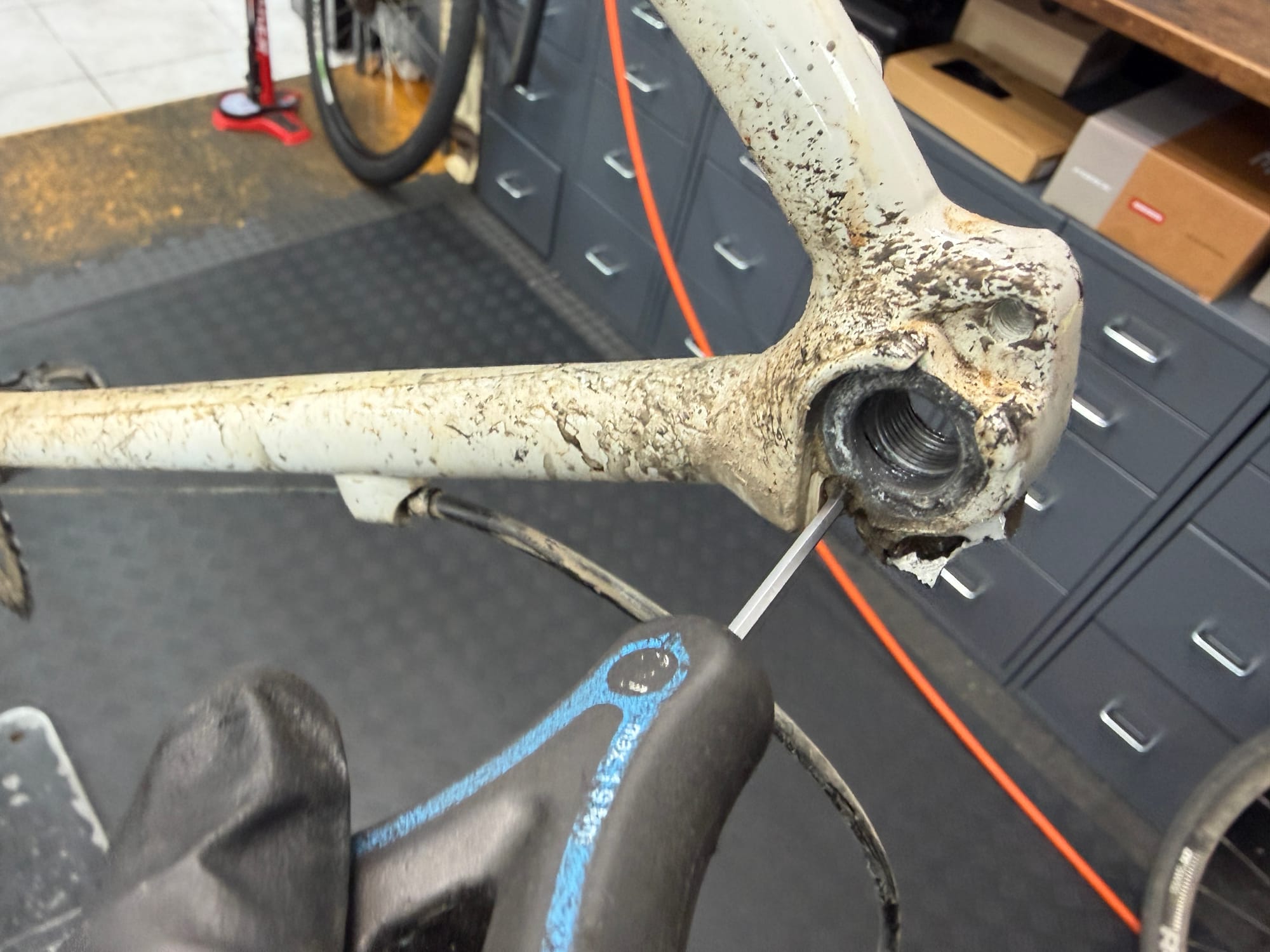
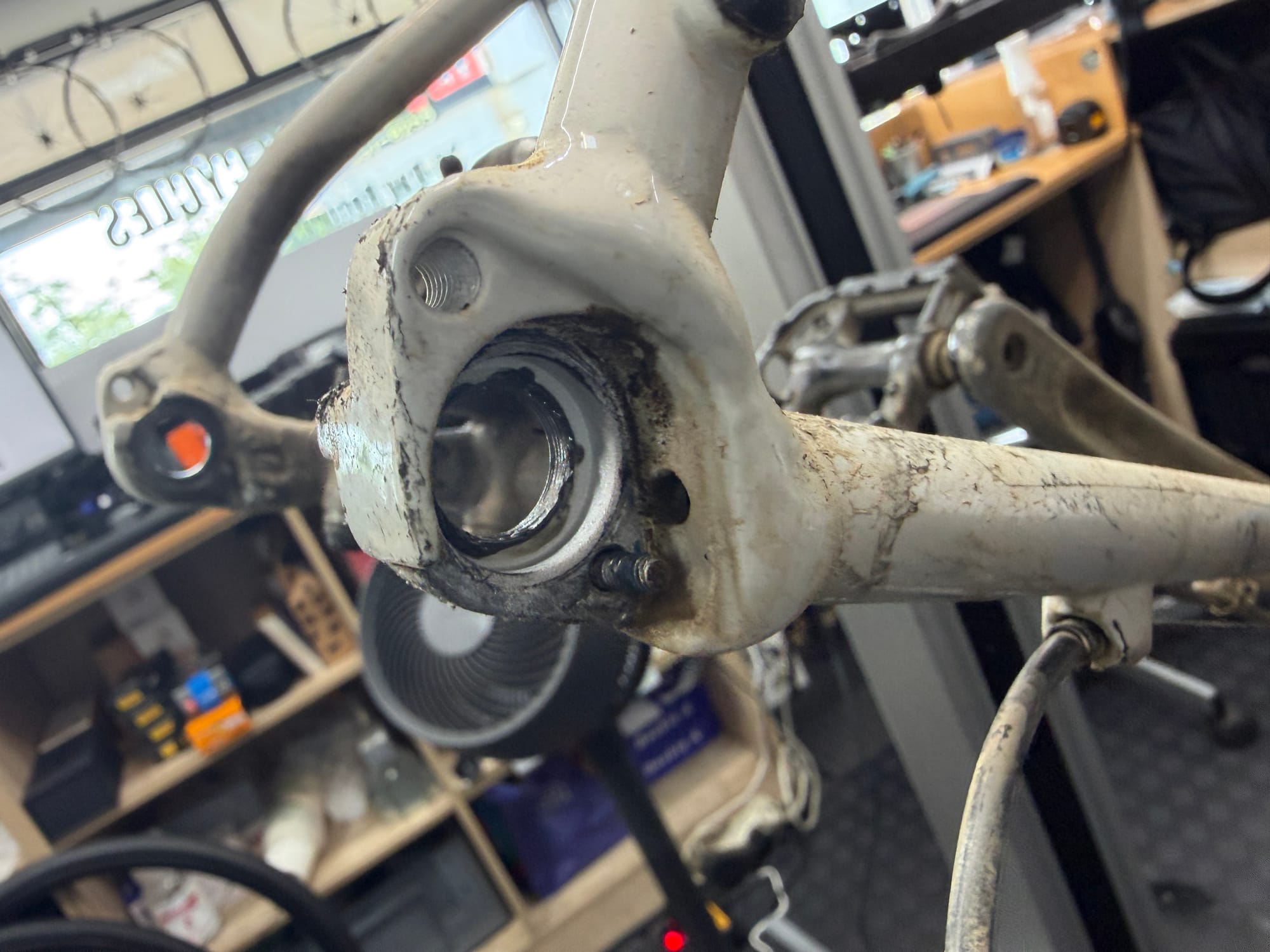
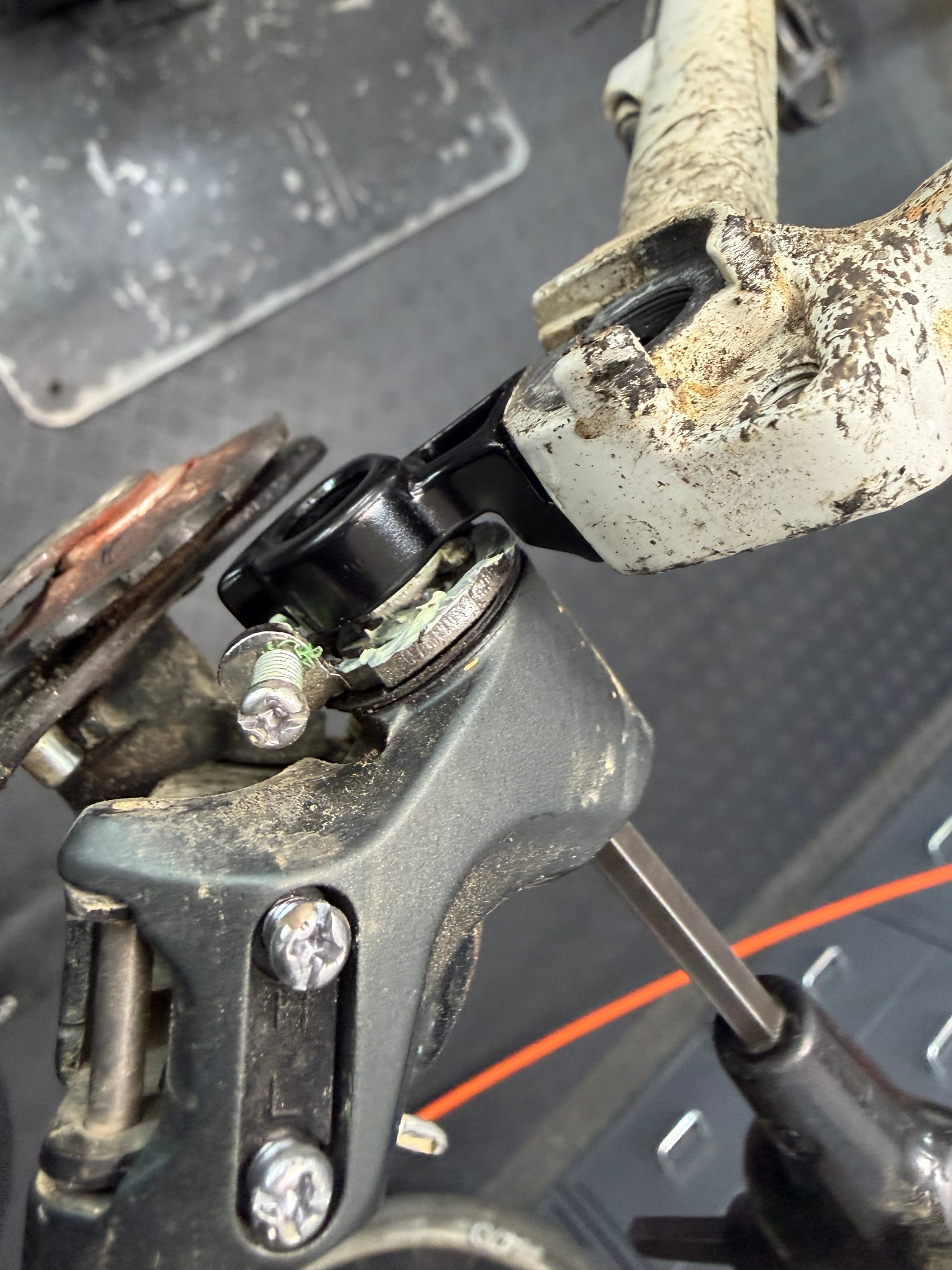
With the new hanger fitted, the derailleur went back on, the shifting was re-indexed, and the bike was running cleanly again.



How to Catch It Before It Breaks
Here's the part worth remembering, because a snapped hanger is avoidable.
If your bike has fallen on its right side and shifting suddenly gets worse, do not shift into the lowest (innermost) gear. That's the exact gear that pulls a bent derailleur into the spokes. Stay out of it until the bike has been checked.
Get the hanger alignment looked at as soon as you can. With a hanger alignment tool, a shop can straighten a bent hanger quickly — unless it's badly bent, it's usually a fast fix and a lot cheaper than a new derailleur or a damaged frame.
And even if you can't see any damage: any time shifting feels off, it's worth checking the rear derailleur from behind. Sight down the bike and look at how parallel the derailleur sits relative to the wheel and cassette. If it looks like it's leaning inward at all, have a shop confirm it. A few minutes of checking can save the whole drivetrain.
The Takeaway
The derailleur hanger is a small part doing a big job — quietly protecting your frame and your derailleur. When it bends, it's a warning. When it breaks, it's usually because that warning went unnoticed.
If your shifting has changed after a knock or a fall, get it checked early. It's almost always a small repair when it's caught in time.
If you're not sure what you're looking at, bring the bike in — we're happy to take a look.