The Health Benefits of Cycling — A Korean Restaurant-Inspired Guide

Every Food in Korea Is Good for You
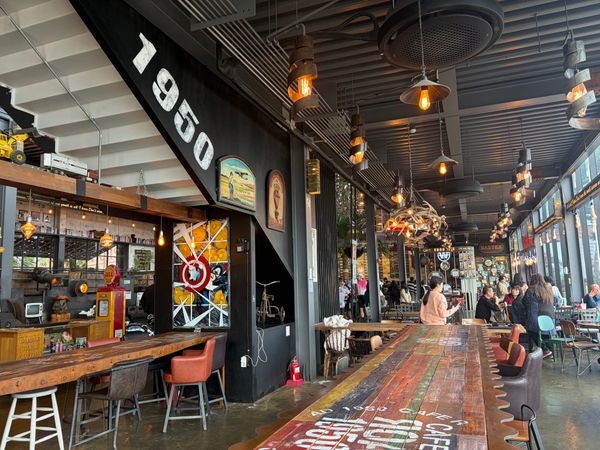
If you've ever eaten at a Korean restaurant — and I mean really looked around while waiting for your food — you've probably noticed something on the walls.
Posters. Framed printouts. Sometimes just a laminated sheet of paper taped next to the menu. They all say roughly the same thing: a detailed breakdown of why the food you're about to eat is good for you.
Order samgyeopsal (pork belly), and the sign will tell you it helps flush out toxins. Sit down for a bowl of samgyetang (chicken ginseng soup), and you'll learn it boosts your stamina and strengthens your immune system. Even something as simple as kimchi jjigae comes with a list of benefits — digestion, metabolism, vitamins, probiotics. Walk into a gopchang (intestine) restaurant, and somehow, intestines are great for your skin. Jokbal (pig's feet)? Collagen. Tteokbokki? Well, someone will find a way.

This isn't false advertising. It's not really marketing either. It's just... Korean food culture.
There's an old saying in Korean medicine: 약식동원 (藥食同源) — food and medicine share the same root. The idea is that what you eat isn't just fuel. It's care. It's prevention. It's treatment. Koreans have believed this for centuries, and it shows in how food is talked about, prepared, and served.
What I find genuinely interesting about this is not whether every claim is scientifically bulletproof. Some are, some are a stretch. What's interesting is the attitude. In Korea, eating is never just eating. There's always an extra layer — a reason beyond hunger, a meaning beyond taste. When someone puts a bowl of seolleongtang (ox bone soup) in front of you and says "This is good for your joints," they're not running a clinical trial. They're sharing something they believe in. And honestly, that makes the whole experience of eating out in Korea more fun and more meaningful.
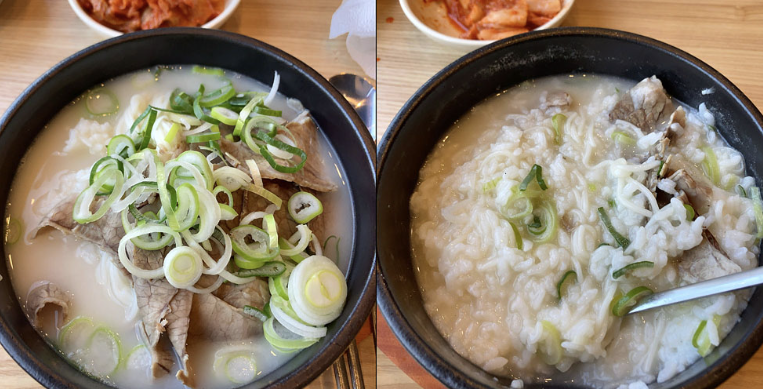
You start paying attention. You look at the walls. You read the signs. You find yourself nodding along — "Oh, so that's why we're eating this." Whether it's true or not, it adds a story to your meal. And food with a story always tastes better.
So if you're stationed in Korea or just visiting, do yourself a favor: next time you're at a restaurant, don't just look at the menu. Look at the walls. You'll learn something — or at least, you'll be entertained.
So, What About Cycling?
Now, cycling is obviously not food. You can't eat a bicycle. But living in Korea and being surrounded by this culture of "everything has health benefits" got me thinking. If a plate of gopchang gets its own health benefits poster on the wall, surely cycling deserves one too.
The difference is — and I say this as someone who's been selling and riding bikes for 20 years — cycling's health benefits don't need any creative interpretation. They're real. They're well-documented. And unlike that poster claiming pork skin will make you look ten years younger, most of what cycling does for your body and mind is backed by actual research.
So today, let's do this Korean restaurant style. Here's your wall poster for cycling.
Cardiovascular Health — Your Heart Will Thank You
Let's start with the big one.
Cycling is an aerobic exercise, which means it gets your heart pumping and your blood flowing. Do it regularly, and your heart gets stronger. It doesn't have to work as hard to pump blood. Your resting heart rate drops. Your blood pressure improves. Your risk of heart disease goes down.
A large-scale study published in the British Medical Journal followed over 250,000 commuters and found that those who cycled to work had a 46% lower risk of developing cardiovascular disease compared to non-cyclists. That's not a marginal improvement. That's significant.
You don't need to be racing or grinding up mountain passes to get these benefits. Regular, moderate cycling — even just commuting a few kilometers — makes a measurable difference. The kind of riding most people can realistically do, most days.
Mental Health — Cheaper Than Therapy
This one doesn't get talked about enough.
Cycling outdoors is one of the most effective natural mood regulators available. When you ride, your body releases endorphins — the same chemicals that make you feel good after a workout. But cycling adds something that a treadmill or a gym session can't: movement through space, changing scenery, fresh air, sunlight.
Research from the Lancet Psychiatry study (covering over 1.2 million Americans) found that people who exercised — cycling being one of the top activities — reported 43% fewer days of poor mental health per month compared to those who didn't exercise.
There's also the meditative quality of riding. When you're on a bike, especially on a quiet path or a long stretch of road, your mind settles. You're focused on the road, the rhythm of your pedaling, the wind. The noise in your head gets quieter. It's not a cure for everything, but as a daily pressure valve, it works.
If you've ever come back from a ride and felt like the world made a little more sense — that's not in your head. Well, technically it is. But the science backs it up.
Joint-Friendly Exercise — Your Knees Will Appreciate It
Here's where cycling has a genuine advantage over running.
Running is great exercise. But it's high-impact. Every step sends force through your ankles, knees, and hips. Over time, especially on hard surfaces, that adds up.
Cycling is low-impact. Your weight is supported by the saddle, and the pedaling motion is smooth and circular — no pounding, no jarring. This makes it ideal for people who want serious cardiovascular exercise without putting stress on their joints.
This matters a lot for people recovering from injuries, dealing with arthritis, carrying extra weight, or simply getting older. Cycling lets you work hard without breaking yourself down in the process. It builds the muscles around your knees (quadriceps, hamstrings) without the repetitive impact that wears cartilage over time.
It's one of the reasons physical therapists frequently recommend cycling as part of rehabilitation programs. It's exercise that builds you up instead of wearing you out.
Weight Management — Burn Without the Burnout
Cycling burns calories. That's straightforward.
How many depends on intensity, duration, and your body weight, but a general range: moderate cycling burns roughly 400 to 600 calories per hour. Push harder, ride longer, add some hills, and that number goes up.
But here's the thing that makes cycling particularly effective for weight management — it doesn't feel like punishment. A lot of people struggle with exercise because it feels like a chore. Running on a treadmill staring at a wall for 45 minutes is not everyone's idea of a good time.
Cycling gives you a destination. You're going somewhere. You're seeing things. You're exploring. An hour on the bike can fly by when you're on a riverside path watching the scenery change. You finish the ride and realize you just burned 500 calories without ever checking the clock.
That sustainability is what matters. The best exercise for weight management is the one you'll actually keep doing. And cycling has a very high stick rate — people who start cycling tend to keep cycling. The barrier to entry is low, the experience is enjoyable, and the results show up quietly over time.
Muscle Tone and Strength — Not Just Legs
People assume cycling only works your legs. It mostly does — your quads, hamstrings, calves, and glutes are doing the bulk of the work. And they will get stronger. Noticeably.
But cycling also engages your core — the muscles in your abdomen and lower back that keep you stable on the bike. The longer you ride, the more your core works to support your posture and balance. Over time, this translates to better overall stability and a stronger midsection.
Your arms and shoulders also contribute, especially during climbs or when navigating technical terrain. It's not a full upper-body workout, but it's more engagement than people expect.
The result, over weeks and months of regular riding, is a leaner, more functional body. Not bulky — cycling builds endurance muscles, not mass. But toned, efficient, and capable.
Better Sleep — Ride Today, Sleep Tonight
There's a direct relationship between physical activity and sleep quality, and cycling fits this perfectly.
A study from the University of Georgia found that regular aerobic exercise (like cycling) reduced the time it takes to fall asleep and increased sleep duration. Participants reported feeling less daytime fatigue and more alertness during waking hours.
The mechanism is fairly simple: physical exertion during the day helps regulate your body's internal clock. You tire your body out (in a healthy way), and when night comes, your system is ready to rest. Cycling outdoors adds natural sunlight exposure to the equation, which further supports your circadian rhythm.
If you've been struggling with sleep — tossing and turning, waking up groggy, relying on your phone until your eyes give up — try replacing some of that screen time with saddle time. It won't solve everything, but a tired body sleeps better than a restless one.
Immune System — Fewer Sick Days
Moderate, regular exercise has been consistently shown to support immune function. Cycling falls right into that sweet spot.
Research from the University of Bath found that regular, moderate-intensity exercise improves immune regulation, potentially reducing the risk of respiratory infections and chronic diseases. The key word is "moderate" — overtraining can have the opposite effect, but consistent, reasonable riding helps your immune system stay sharp.
There's also an interesting study from King's College London that looked at amateur cyclists aged 55 to 79. They found that the cyclists had immune systems that looked much younger than their age — their thymus glands (which produce immune T-cells) were producing as many T-cells as a young person's. The non-cycling control group showed typical age-related immune decline.
In other words: regular cycling doesn't just keep you fit. It may help keep your immune system younger than your actual age.
Social Connection — The Underrated Benefit
This one won't show up on a medical chart, but it matters.
Cycling is inherently social. Group rides, cycling clubs, even casual conversations at the bike shop — the cycling community tends to be welcoming and easy to connect with. Here in Korea, there are communities like DOPE Cycling Club running regular group rides, and the energy you get from riding with others is something a solo treadmill session can't replicate.
For people who are new to Korea — especially military personnel on a PCS assignment — cycling is one of the fastest ways to meet people, explore the area, and build a social circle outside of work. You show up, you ride, you talk. That's it. No complicated social dynamics, no awkward small talk at a bar. Just shared effort and shared roads.
Loneliness is a genuine health issue. The U.S. Surgeon General has called it a public health epidemic. Anything that naturally brings people together around a healthy activity is worth paying attention to.
Brain Health — Pedal Your Way to Sharper Thinking
Cycling increases blood flow to the brain. More blood flow means more oxygen and nutrients reaching your brain cells. This supports cognitive function — memory, attention, problem-solving, creativity.
A study from the University of Illinois found that regular aerobic exercise (cycling included) led to a 15-20% improvement in mental test performance. Other research has linked consistent cycling with reduced risk of cognitive decline and dementia in older adults.
There's also the immediate effect. Many people report thinking more clearly after a ride — ideas flow easier, problems feel more solvable, mental fog lifts. It's not magic. It's increased cerebral blood flow and a healthy dose of endorphins doing exactly what they're designed to do.
If you have a tough decision to make or a problem you can't crack — go for a ride. You might come back with the answer.
Practical Transportation — Exercise That Gets You Somewhere
Here's one that the Korean restaurant health poster would never list, because food doesn't take you to work.
Cycling is transportation. Real, functional, everyday transportation. You can ride to the office, to the grocery store, to a friend's place, to a café. Every trip you make by bike instead of by car is exercise you didn't have to schedule. It just... happens.
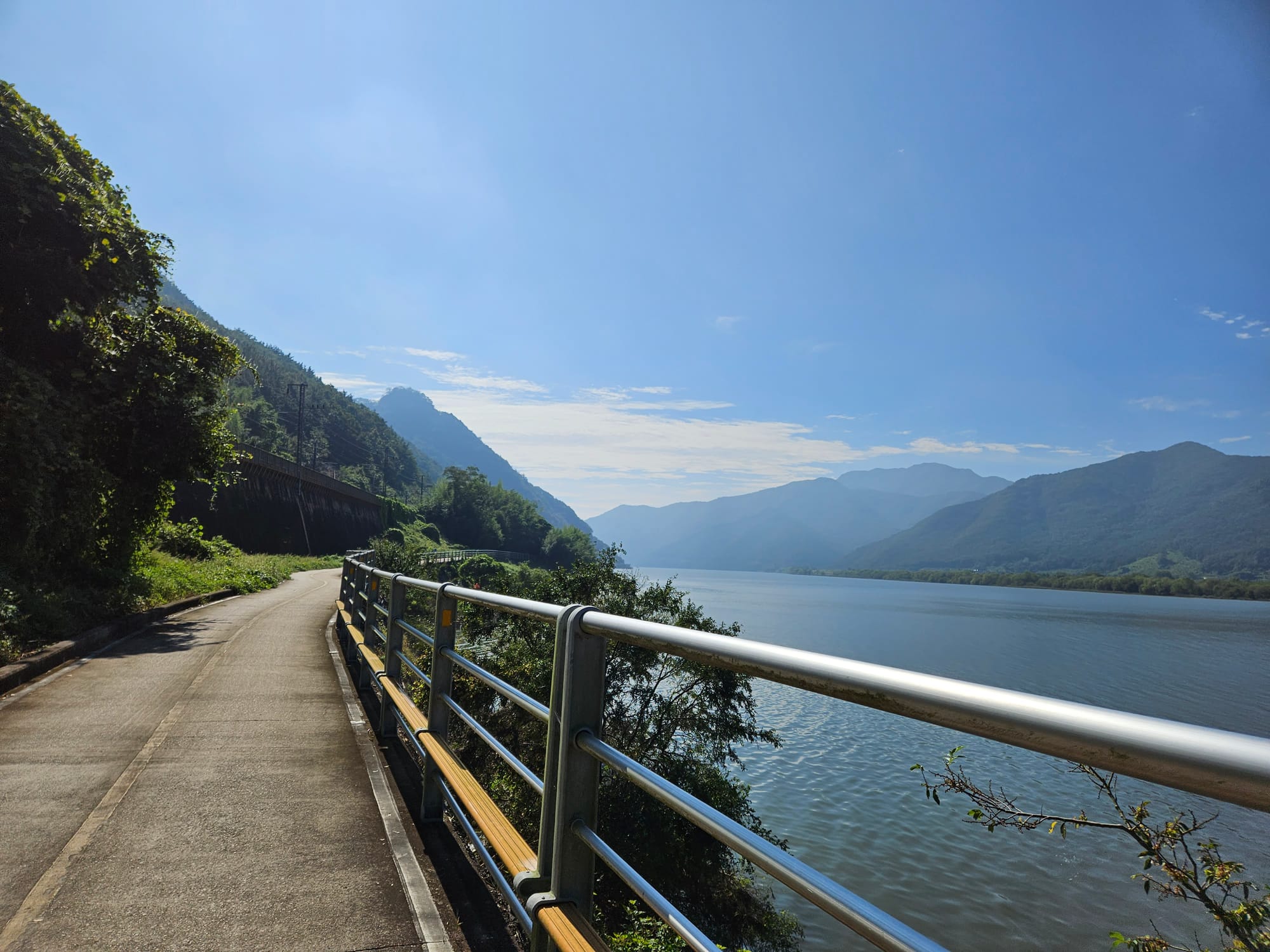
In Korea, this is especially practical. The country has an incredible network of dedicated cycling paths — along rivers, through cities, between towns. The infrastructure here is genuinely world-class. You're not dodging traffic on a highway. You're riding on smooth, well-maintained paths with clear signage and rest stops.
Commuting by bike means you start and end your day with exercise, fresh air, and a clear head. No traffic jams, no parking stress, no gas costs. Just you, your bike, and the road.
Longevity — More Years, Better Years
Let's wrap it up with the long game.
A study published in the British Medical Journal found that regular cycling was associated with a lower risk of all-cause mortality. Cyclists lived longer, on average, than non-cyclists. Another study from Copenhagen tracked over 30,000 people for 14 years and concluded that regular cycling added an average of 3 to 4 years to life expectancy.
But it's not just about adding years to your life. It's about adding life to your years. The cyclists in that King's College London study — the ones with younger-looking immune systems — also had better muscle mass, cholesterol levels, and overall physical function than non-cyclists their age. They weren't just living longer. They were living better.
Cycling isn't a miracle cure. Nothing is. But the accumulated evidence from decades of research paints a consistent picture: people who ride bikes regularly tend to be healthier, happier, and more resilient — physically and mentally — than those who don't.
Your Wall Poster
So if Korean restaurants can put up a poster listing every benefit of their food, here's the cycling version. Clip it out. Tape it to your wall. Laminate it if you want.
The Health Benefits of Cycling (자전거의 효능)
| Benefit | What It Does |
|---|---|
| Heart Health 심혈관 건강 |
Lowers risk of cardiovascular disease by up to 46% |
| Mental Health 정신 건강 |
Reduces poor mental health days by 43% |
| Joint-Friendly 관절 보호 |
Full cardio workout without impact damage |
| Weight Management 체중 관리 |
Burns 400–600+ cal/hour — and you'll actually enjoy it |
| Muscle Tone 근력 강화 |
Builds legs, glutes, core — lean and functional |
| Better Sleep 수면 개선 |
Fall asleep faster, sleep deeper, wake up sharper |
| Immune Support 면역력 강화 |
Keeps your immune system younger than your age |
| Social Connection 사회적 연결 |
Builds community, fights loneliness |
| Brain Health 뇌 건강 |
15–20% improvement in cognitive performance |
| Transportation 이동 수단 |
Exercise that actually takes you places |
| Longevity 수명 연장 |
+3 to 4 years average life expectancy |
Unlike the gopchang restaurant's claim about glowing skin, every single line on this list has published research behind it.
One Last Thing
The beautiful thing about cycling is that you don't need to believe in it for it to work. You don't need to read the wall poster or memorize the statistics. You just need to get on the bike and ride.
The benefits show up whether you're chasing them or not. Ride because it's fun. Ride because you want to explore Korea. Ride because it's Tuesday and the weather is nice. The health stuff? It just happens along the way.
And if someone asks you why you ride so much, you can do the Korean restaurant thing — point to the wall and say, "It's good for you."
Platoon Cycles — Pyeongtaek, South Korea
www.platooncycles.com